When it comes to concrete demolition, most contractors instinctively reach for mechanical equipment. Breakers, peckers and jackhammers have been standard concrete breaking tools on UK sites for decades.
But modern projects aren’t always suited to high-impact methods.
Noise restrictions, neighbouring properties, retained structures and tight access can all change the equation. In those situations, the right choice is purely about control.
What Counts as Concrete Breaking Tools?
Concrete breaking tools generally fall into two categories:
Mechanical Tools
- Handheld jackhammers
- Hydraulic breakers mounted to excavators
- Hydraulic splitters
- Cut-and-break saw systems
These rely on impact force or hydraulic pressure to fracture concrete.
Chemical Methods
These work through controlled expansion inside drilled holes, rather than impact.
Both approaches can be effective. The difference is how they affect the surrounding environment.
Mechanical Concrete Breaking Tools
Mechanical tools break concrete by applying repeated impact or direct hydraulic force. They’re familiar, widely available and often fast in open environments.
Jackhammers and Handheld Breakers
Handheld breakers are common for:
- Slab removal
- Small foundations
- Internal concrete breaking
They’re accessible and don’t require specialist licensing.
However, they produce:
- High vibration
- Significant noise
- Operator fatigue
On sensitive sites, vibration can transfer into adjoining structures. In residential areas, complaints can slow work down quickly.
For straightforward concrete breaking on isolated slabs, they work well. But they’re not subtle.
Hydraulic Breakers (Peckers)
Hydraulic breakers mounted to excavators are designed for heavier concrete demolition and large volumes.
They offer:
- High output
- Faster removal on open sites
- Reduced manual labour compared to handheld tools
But they also create:
- Strong vibration transfer
- High noise levels
- Limited suitability for confined or internal spaces
If you’re breaking up a large external slab with no neighbouring structures, mechanical plant makes sense. If you’re near retained buildings, it becomes more complicated.
Hydraulic Splitters
Hydraulic splitters sit between impact tools and chemical systems.
The process involves drilling holes into concrete, inserting a mechanical wedge and expanding it hydraulically to split the material.
They provide more controlled cracking than impact tools and significantly less vibration.
However:
- The equipment is specialist
- Setup can be slower
- Each hole must be worked individually
For some contractors, especially on mixed or smaller jobs, that can limit practicality.
Chemical Concrete Breaking Methods
Where mechanical impact creates too much disruption, chemical systems offer a valid alternative.
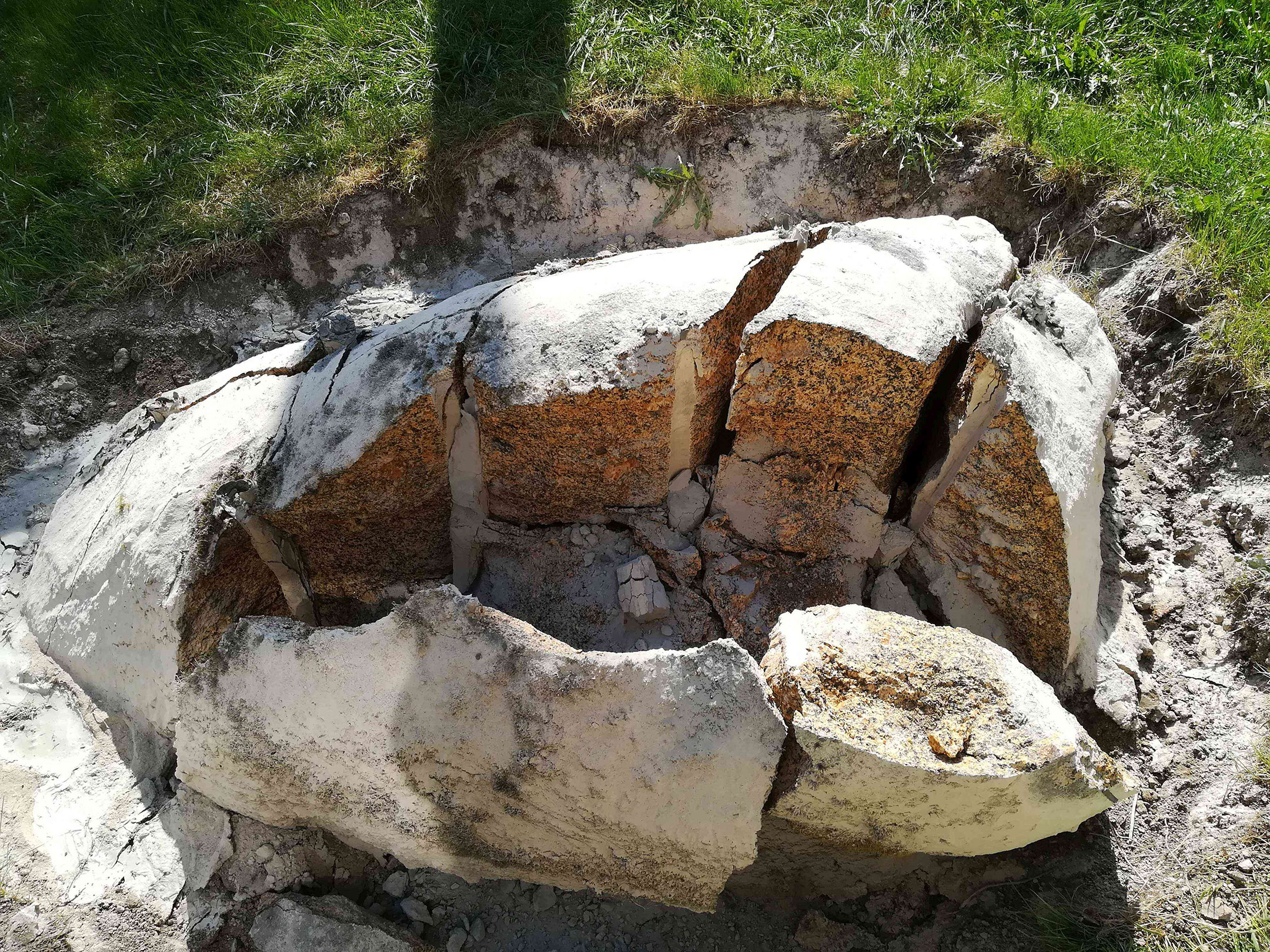
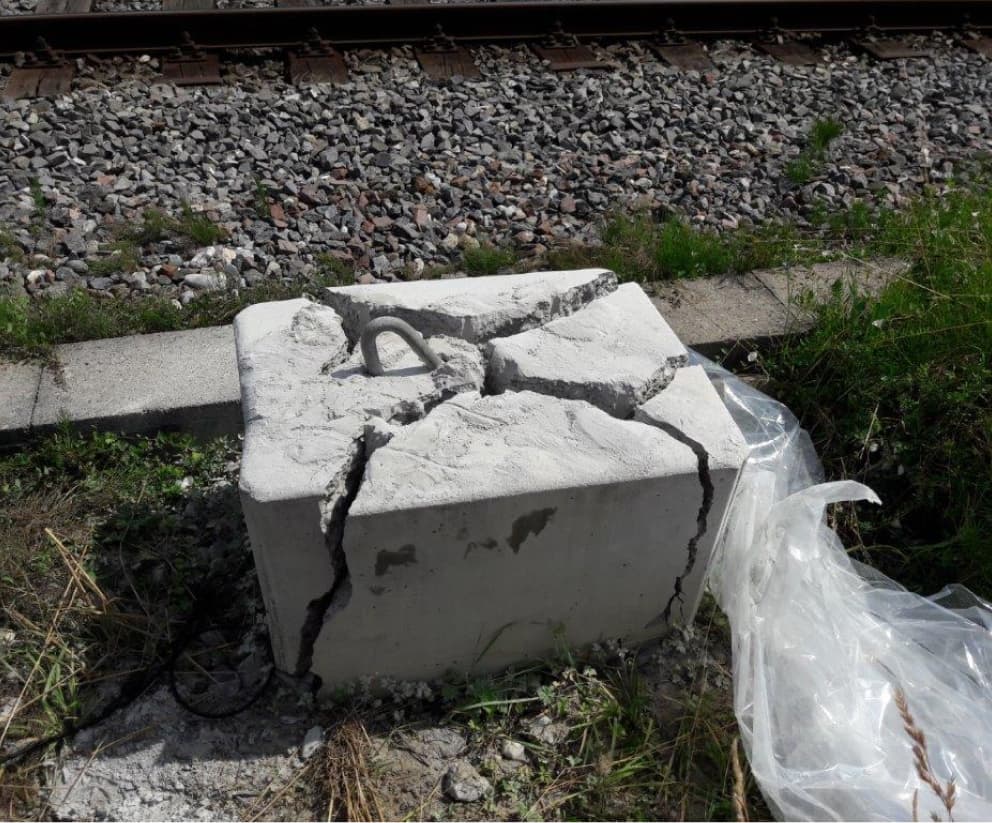
A non explosive demolition agent works through controlled internal expansion rather than repeated impact.
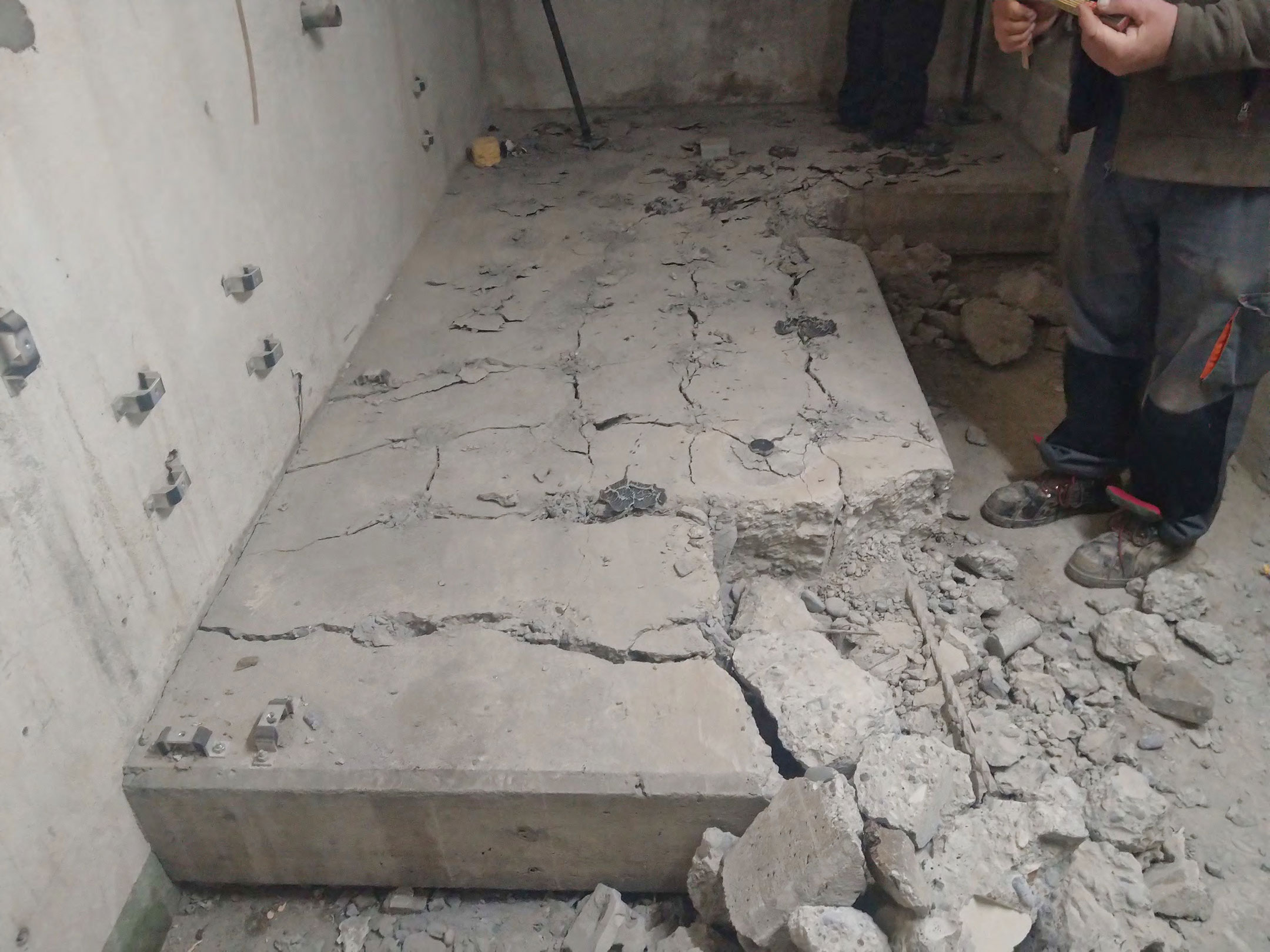
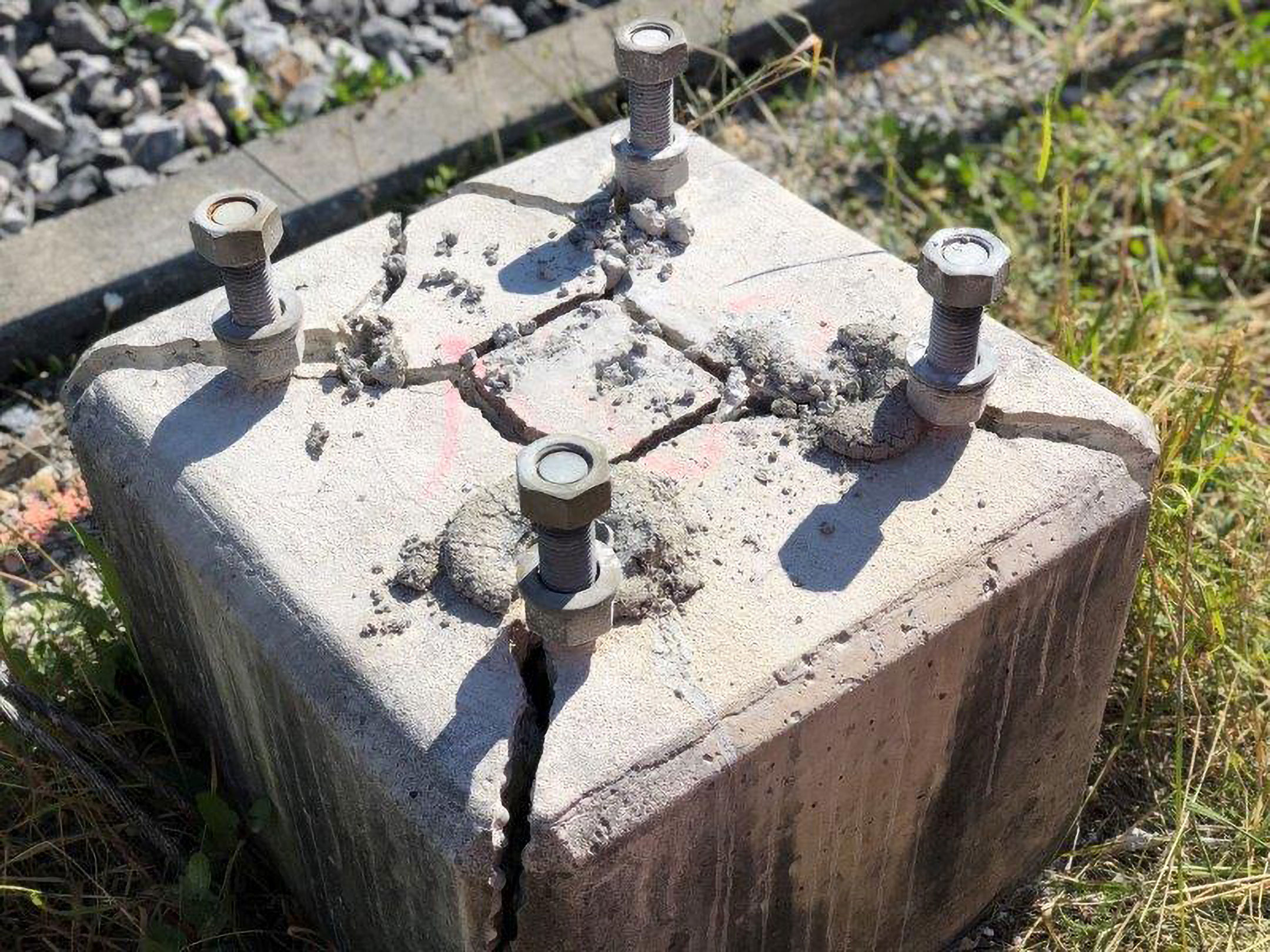
Instead of hammering the concrete apart, you allow pressure to build inside drilled holes until the material fractures.
This makes it particularly suited to:
- Non explosive concrete demolition
- Non explosive rock breaking
- Sensitive structural areas
- Noise-restricted sites
How Non Explosive Concrete Demolition Works
The process is straightforward and manageable on a normal construction site:
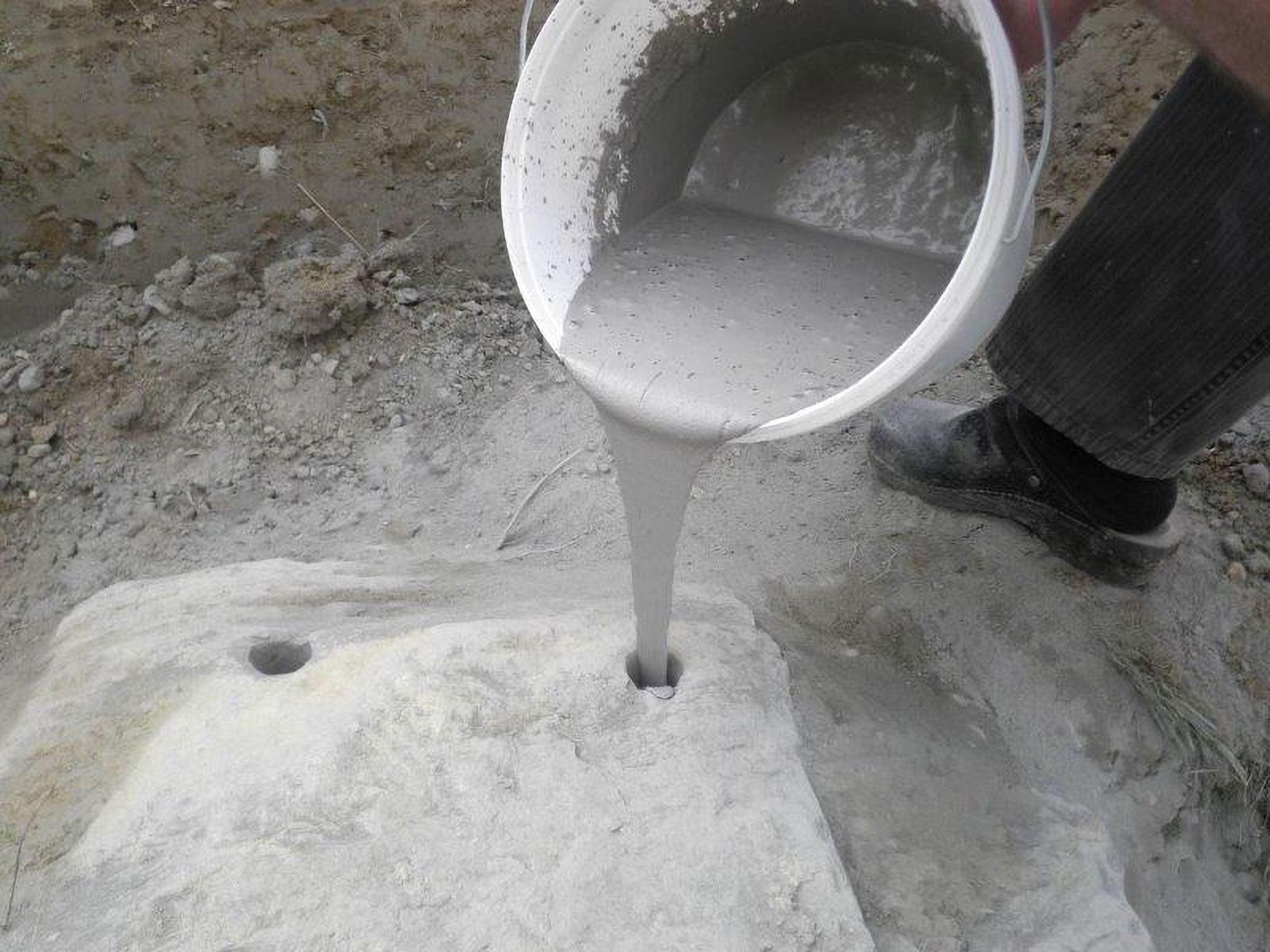
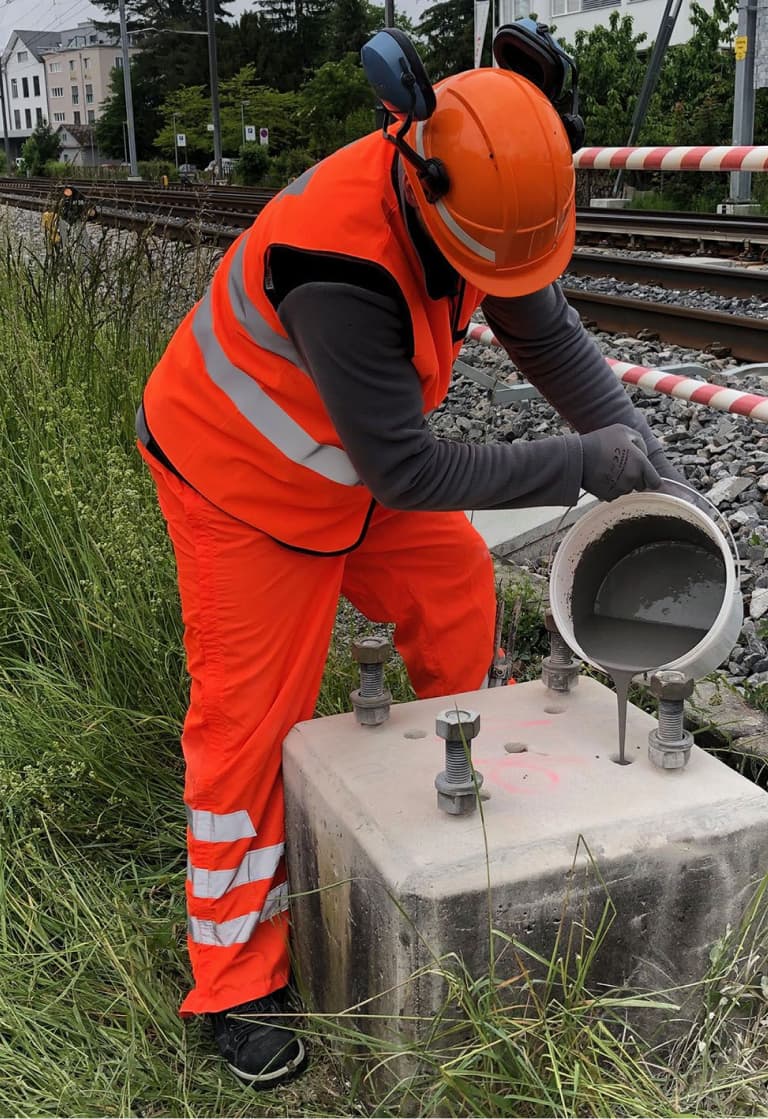
Drill → Mix → Fill → Wait
- Drill a pattern of holes into the concrete or rock.
- Mix the powder with clean water.
- Pour the mix into the holes.
- Allow it to expand and fracture the material.
There’s no detonation.
No shockwave.
No vibration transfer.
Cracking happens gradually as expansive pressure builds.
Importantly, this method does not require a blasting licence or explosive handling permits. It’s suitable for professional contractors without specialist demolition certification.
For sites where vibration is the real issue, this can make all the difference.
Mechanical vs Chemical – Side-by-Side Comparison
When comparing concrete breaking tools, the key differences come down to impact versus expansion.
| Factor | Mechanical Methods | Chemical Methods |
|---|---|---|
| Noise | High | Minimal |
| Vibration | High to moderate | None |
| Speed | Immediate breaking | Gradual cracking over time |
| Control | Operator dependent | Predictable expansion |
| Access | Requires tool or plant access | Requires drill access only |
| Licensing | No blasting licence required | No blasting licence required |
Mechanical tools win on immediate force. Chemical systems win on control and reduced disruption.
When Mechanical Tools Make More Sense
It’s important to be realistic.
Mechanical methods are often the right choice when:
- You’re working on an open site
- There are no adjacent structures
- Noise isn’t restricted
- Heavy plant is already on hire
- Time is critical
On isolated demolition sites, hydraulic breakers can remove large volumes quickly.
Not every job needs a low-vibration approach.
When Chemical Breaking Is the Smarter Option
Chemical methods are particularly useful where impact creates risk.
Typical scenarios include:
- Breaking foundations beside retained buildings
- Internal slab removal
- Residential projects with close neighbours
- Basement work
- Concrete demolition near utilities
- Tight access areas where plant can’t reach
If noise complaints are a concern, it’s worth reviewing guidance on how to break concrete without noise complaints before choosing your method.
Similarly, where plant access is limited, understanding how to break up concrete without heavy machinery can help you avoid unnecessary equipment hire.
In these environments, non explosive concrete demolition provides control without adding vibration risk.
Cost Considerations Beyond Equipment Hire
At first glance, mechanical tools may seem cheaper if you already have the kit.
But real job costs include:
- Equipment hire
- Fuel
- Operator fatigue
- Potential structural repairs
- Delays caused by complaints or restrictions
Chemical systems introduce material cost and drilling time, but they can reduce:
- Plant hire
- Risk of structural damage
- Programme disruption
- Neighbour complaints
On restricted sites, reduced disruption can outweigh raw breaking speed.
Choosing the Right Tool for Your Site
The best concrete breaking tools aren’t always the most aggressive.
Before deciding, consider:
- What’s surrounding the concrete?
- Could vibration cause damage?
- Is the site residential or commercial?
- Are there noise limits?
- Can plant access the area safely?
If you’re working in open space with no constraints, mechanical impact may be the fastest route.
If you’re working close to existing structures, services or neighbours, a controlled expansion method can reduce risk significantly.
Mechanical vs Chemical: What Makes Sense for Your Site?
Concrete breaking and concrete demolition don’t always require maximum force. They require the right approach.
Mechanical tools remain effective and widely used. But they bring noise and vibration that aren’t suitable for every site.
Non explosive concrete demolition offers a different route. By drilling, mixing and filling – then allowing the material to expand – you can fracture concrete or rock without impact, shock or specialist explosive licensing.
Need a smarter alternative to heavy breakers? Shop BETONAMIT® and take control of your concrete demolition.