If you’re facing thick concrete in your garden, driveway or garage base, you’ll quickly realise that standard DIY tools aren’t always enough.
Thin patio slabs are one thing. But once you’re dealing with 150–200mm thick concrete – especially if it’s reinforced – concrete breaking becomes a much tougher job.
Whether you’re removing an old driveway, lifting a garage floor or clearing a heavy shed base, the method you choose will affect noise levels, effort, cost and the risk of damaging nearby structures.
Why Thick Concrete Is Harder to Break
Concrete strength isn’t just about surface hardness. Thickness makes a major difference.
Thicker slabs often:
- Sit on compacted hardcore
- Contain steel reinforcement mesh
- Tie into house foundations
- Form part of a structural base
That extra mass absorbs impact. A light-duty breaker might chip away at the surface but struggle to create full-depth cracks.
Many homeowners underestimate this and start with a sledgehammer, small electric breaker and basic DIY tools.
On thin slabs, that can work. On thick concrete, it often leads to hours of noise and very little progress.
Home concrete breaking needs a planned approach, especially when the slab is close to your property.
Option 1: Manual Concrete Breaking at Home
The most accessible method is manual breaking.
This usually involves sledgehammers, hire-shop electric breakers and SDS hammer drills.
Pros
- No specialist knowledge required
- Tools are easy to hire
- Immediate visible progress
Cons
- Extremely physically demanding
- Very noisy
- High vibration
- Slow on thick or reinforced slabs
Vibration can transfer into nearby walls, paving and foundations. In terraced or semi-detached properties, that’s a genuine concern.
If the slab is over 150mm thick or reinforced, manual breaking quickly becomes exhausting and not always effective.
Option 2: Hiring Heavy Machinery
For thicker slabs, many people consider bringing in a mini digger with a hydraulic breaker.
This can be effective for large, open driveways or detached areas.
Pros
- Fast removal
- Less manual effort
- Good for large surface areas
Cons
- Access issues through gates and gardens
- Risk of damaging lawns, patios or drains
- High noise
- Ground vibration
- Higher hire costs
In many domestic settings, simply getting machinery into position is the biggest challenge.
If access is limited, it’s worth reading about how to break up concrete without heavy machinery before committing to plant hire.
On tight residential plots, machinery isn’t always practical.
The Problem With Noise and Vibration at Home
Breaking thick concrete at home goes beyond physical effort. It can seriously disrupt your surroundings.
Domestic properties bring added complications:
- Close neighbours
- Shared boundaries
- Restricted working hours
- Existing foundations nearby
Hydraulic breakers create significant vibration. That can cause cracking in old brickwork or weaken adjacent structures if not managed carefully.
Noise complaints are also common when impact tools are used for extended periods.
If you’re working in a built-up area, a low noise demolition solution may be worth considering before starting.
A Controlled Alternative: Non Explosive Concrete Demolition
Instead of breaking concrete with impact, another option is controlled expansion.
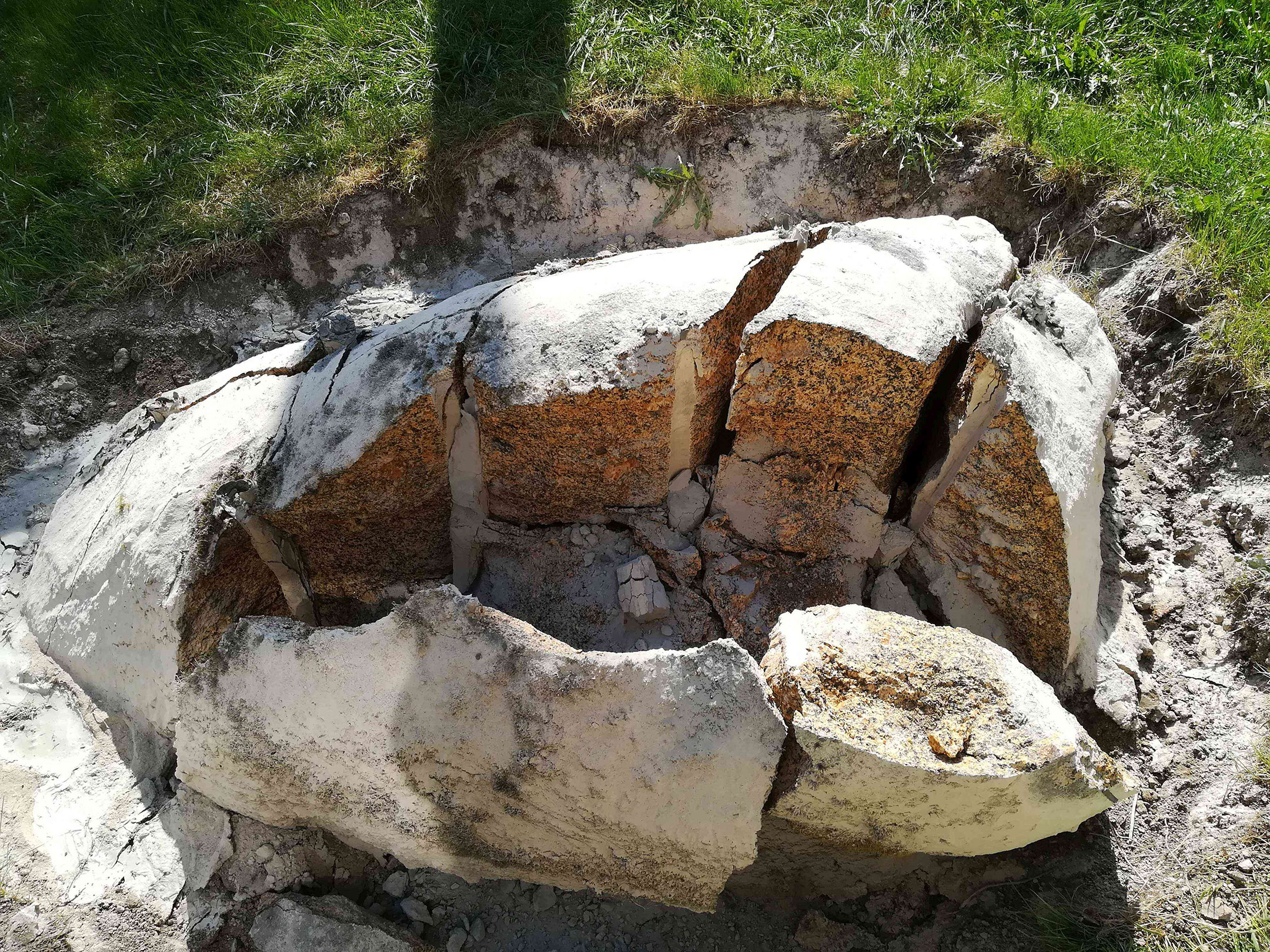
A non explosive demolition agent works by creating internal pressure inside drilled holes.
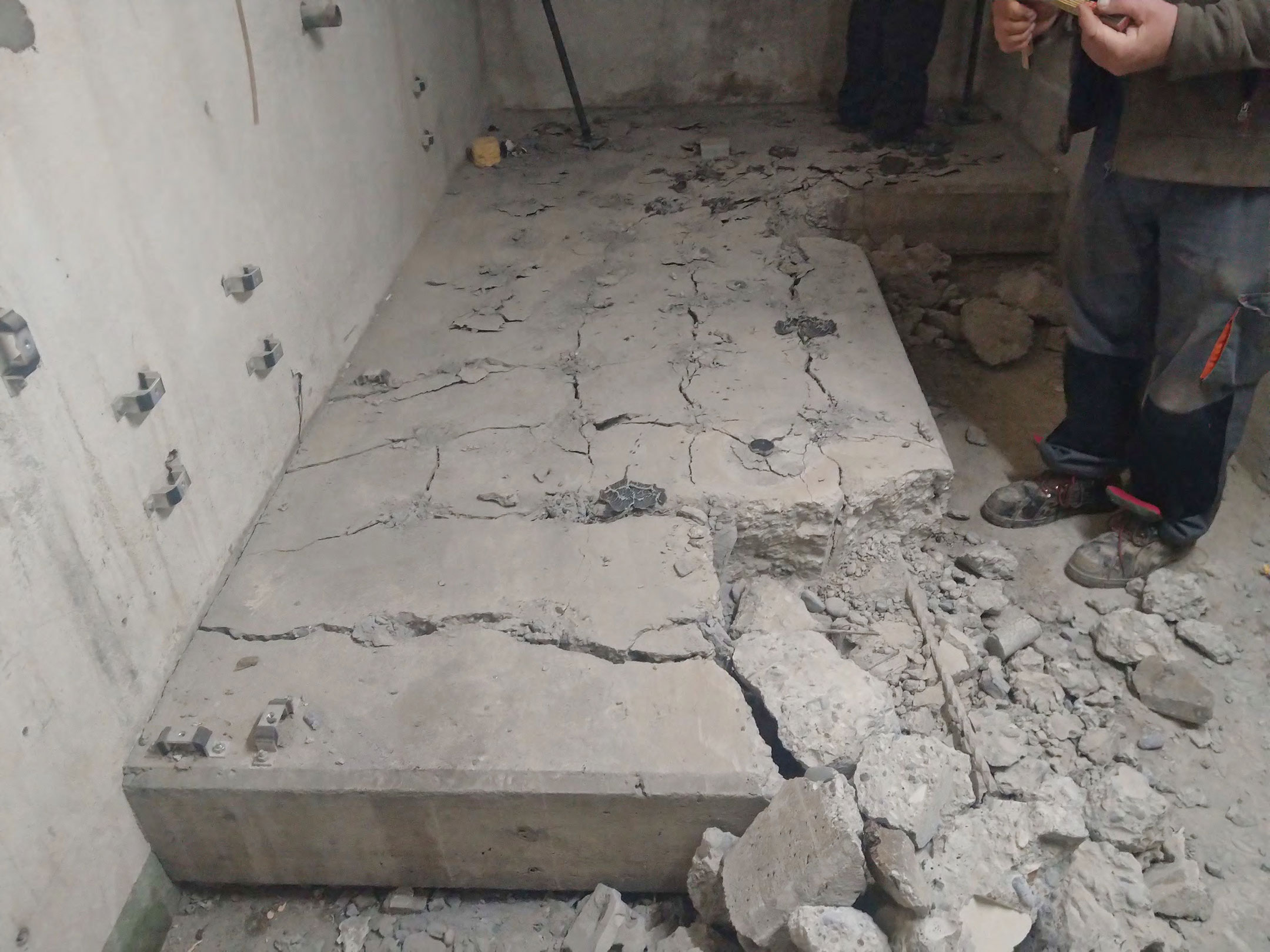
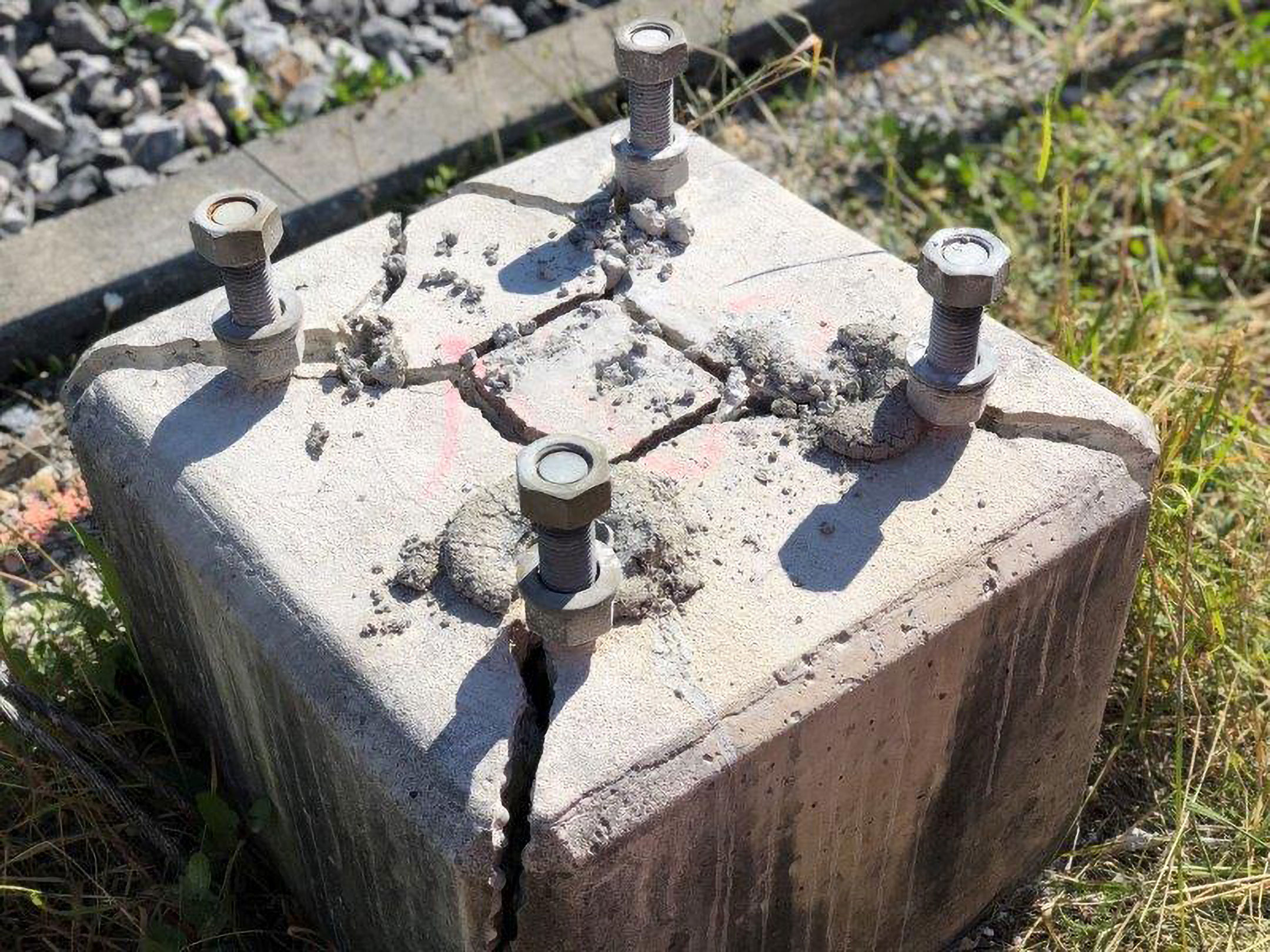
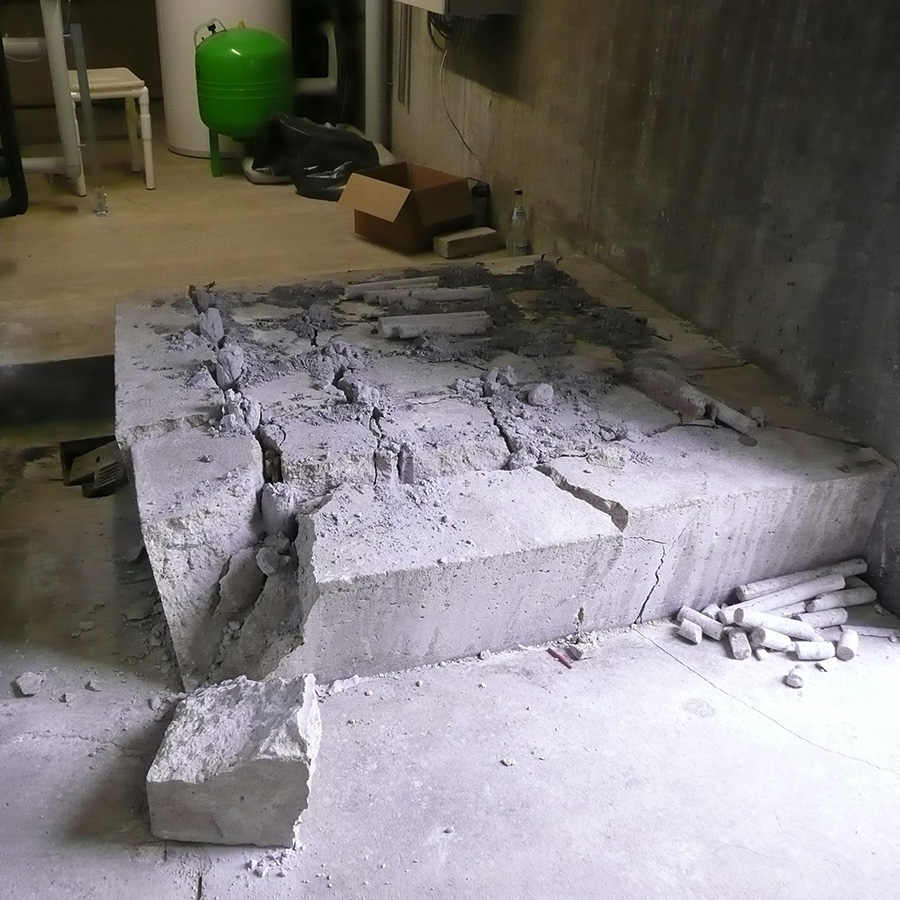
There’s no explosion and no shockwave. Instead of hammering the slab apart, you allow it to crack from the inside.
This approach is widely used for:
- Concrete demolition
- Thick reinforced slabs
- Non explosive rock breaking
- Sensitive residential sites
And importantly, it doesn’t require a blasting licence or specialist demolition certification.
How It Works for Thick Concrete at Home
The process is straightforward and manageable for competent DIY users:
Drill → Mix → Fill → Wait
- Drill a pattern of holes into the slab.
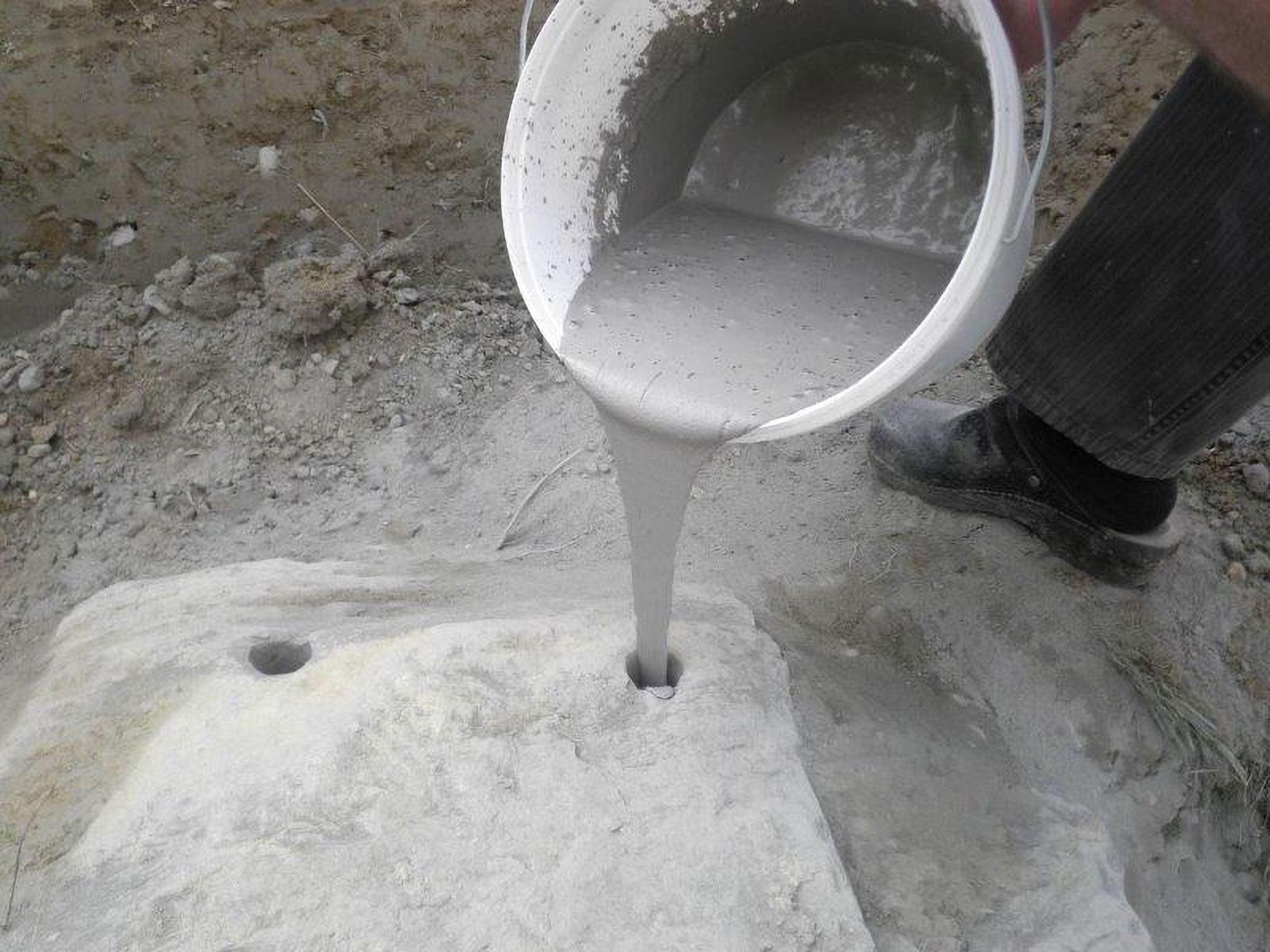
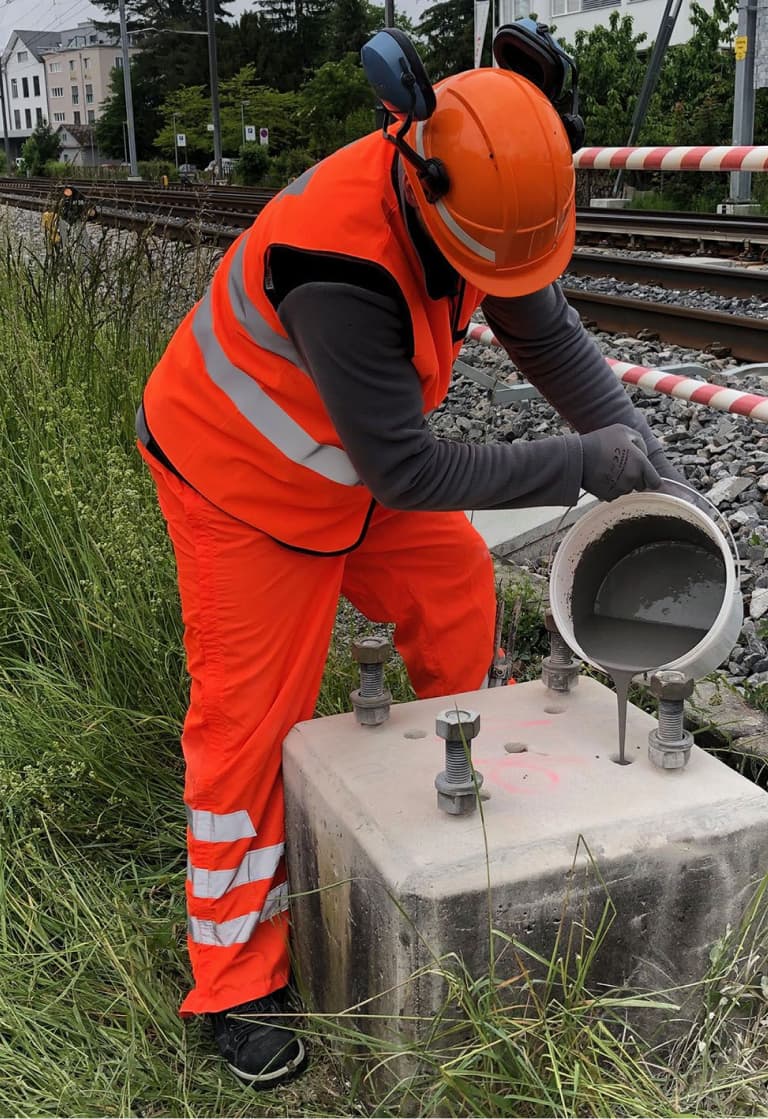
- Mix the powder with clean water.
- Pour the mixture into the holes.
- Leave it to expand and fracture the concrete.
As the material cures, it expands inside the holes and creates controlled cracking pressure.
There’s:
- No flying debris
- No vibration transfer
- Minimal noise
For thicker slabs, especially reinforced ones, this controlled expansion can be far more effective than repeated impact.
For more detail on using this method specifically for slabs, see non explosive concrete demolition guidance.
When This Method Makes the Most Sense at Home
Non explosive concrete demolition is particularly useful where:
- The slab is attached to your house
- Foundations run alongside the area
- Boundary walls are close
- You’re working in a basement
- Access for machinery is restricted
- Neighbours are only metres away
If you can drill into the slab, you can break it – without needing heavy machinery or constant hammering.
Is It Safe for DIY Use?
Understandably, many homeowners are cautious about demolition methods.
With non explosive systems:
- There is no detonation
- No explosive handling
- No specialist licence required
- Clear mixing instructions are provided
Basic PPE such as gloves and eye protection is still essential, as with any site work.
But compared to impact breaking, the process is calmer and more controlled.
Instead of managing flying fragments and heavy vibration, you’re allowing the material to expand naturally.
Comparing Your Options for Breaking Thick Concrete at Home
Here’s how the main approaches compare:
| Method | Noise | Vibration | Physical Effort | Access Required | Control |
|---|---|---|---|---|---|
| Manual Breaking | High | High | Very high | Minimal | Low |
| Heavy Machinery | High | High | Low | Machine access needed | Moderate |
| Non-Explosive Demolition | Minimal | None | Moderate (drilling only) | Drill access only | High |
Manual breaking relies on strength and endurance.
Machinery relies on access and space.
Chemical expansion relies on controlled pressure.
For thick slabs in residential settings, control often matters more than speed.
Choosing the Best Way to Break Thick Concrete at Home
Thick concrete isn’t impossible to remove. It simply requires the right approach.
Manual methods can be exhausting and extremely noisy. Heavy machinery can be disruptive and difficult to manoeuvre in domestic gardens.
If the slab is close to your home, neighbours or existing structures, a controlled method often makes more sense.
Non explosive concrete demolition gives you a practical way to break thick slabs without shock, vibration or specialist licensing.
Drill the holes.
Mix the material.
Fill and allow it to expand.
For many homeowners, that steady, controlled process is the safest and most manageable way to tackle heavy concrete at home.
Skip the disruption and break concrete the smarter way. Buy BETONAMIT® and get started with confidence.