Most concrete demolition still relies on impact. Breakers, peckers and jackhammers are standard kit on UK sites.
But not every job can tolerate vibration.
In refurbishment projects, basement work, residential areas or tight urban plots, vibration can cause further problems. Cracked masonry, disturbed foundations and unhappy neighbours quickly turn a simple job into a liability.
So when does demolition without vibration really matter and what’s the practical alternative?
Why Vibration Is a Serious Issue in Concrete Demolition
Impact tools work by transferring force into the material. That force doesn’t stop at the edge of your cut line.
Vibration can:
- Travel into retained structures
- Cause hairline cracking in old masonry
- Weaken adjoining slabs
- Disturb shallow foundations
- Affect buried utilities
On isolated sites, that may not be a concern. On modern projects, it’s a genuine risk – especially in built-up areas.
Where you’re removing part of a slab but keeping the rest, or breaking concrete next to an occupied building, uncontrolled vibration can create structural and commercial problems.
That’s where demolition without vibration becomes necessary, not just a preference.
Where Vibration-Free Concrete Demolition Matters Most
Certain environments demand greater control.
Working Next to Retained Structures
Structural alterations often involve partial removal:
- Cutting back a slab
- Removing a foundation section
- Creating new openings
If the remaining structure must stay intact, heavy impact increases the chance of cracking beyond your intended area.
Controlled cracking reduces that risk.
Basement and Internal Works
Breaking concrete inside a building introduces another layer of concern.
Vibration can:
- Transfer through floors
- Disturb upper levels
- Affect finishes
- Impact adjoining properties
Noise is also amplified indoors. In these situations, a low noise demolition solution is often essential.
Residential and Urban Projects
Terraced housing, shared walls and tight access make vibration a serious consideration.
Even if structural damage doesn’t occur, visible cracking can lead to disputes and insurance claims.
In these cases, reducing vibration is risk management best practice.
The Limits of Mechanical Breaking Tools
Mechanical tools remain effective in open environments.
Handheld breakers and hydraulic peckers:
- Remove concrete quickly
- Require no blasting licence
- Are widely available
But they all rely on impact. Impact means vibration.
Even hydraulic splitters, which offer more control than jackhammers, still apply mechanical force directly to the material. On sensitive sites, that force can’t always be contained.
Mechanical tools absolutely have their place. But when protection of surrounding structures is critical, they’re not always the right fit.
How Non Explosive Concrete Demolition Works
An alternative approach is to remove impact from the equation entirely.
A non explosive demolition agent works through expansion rather than force.
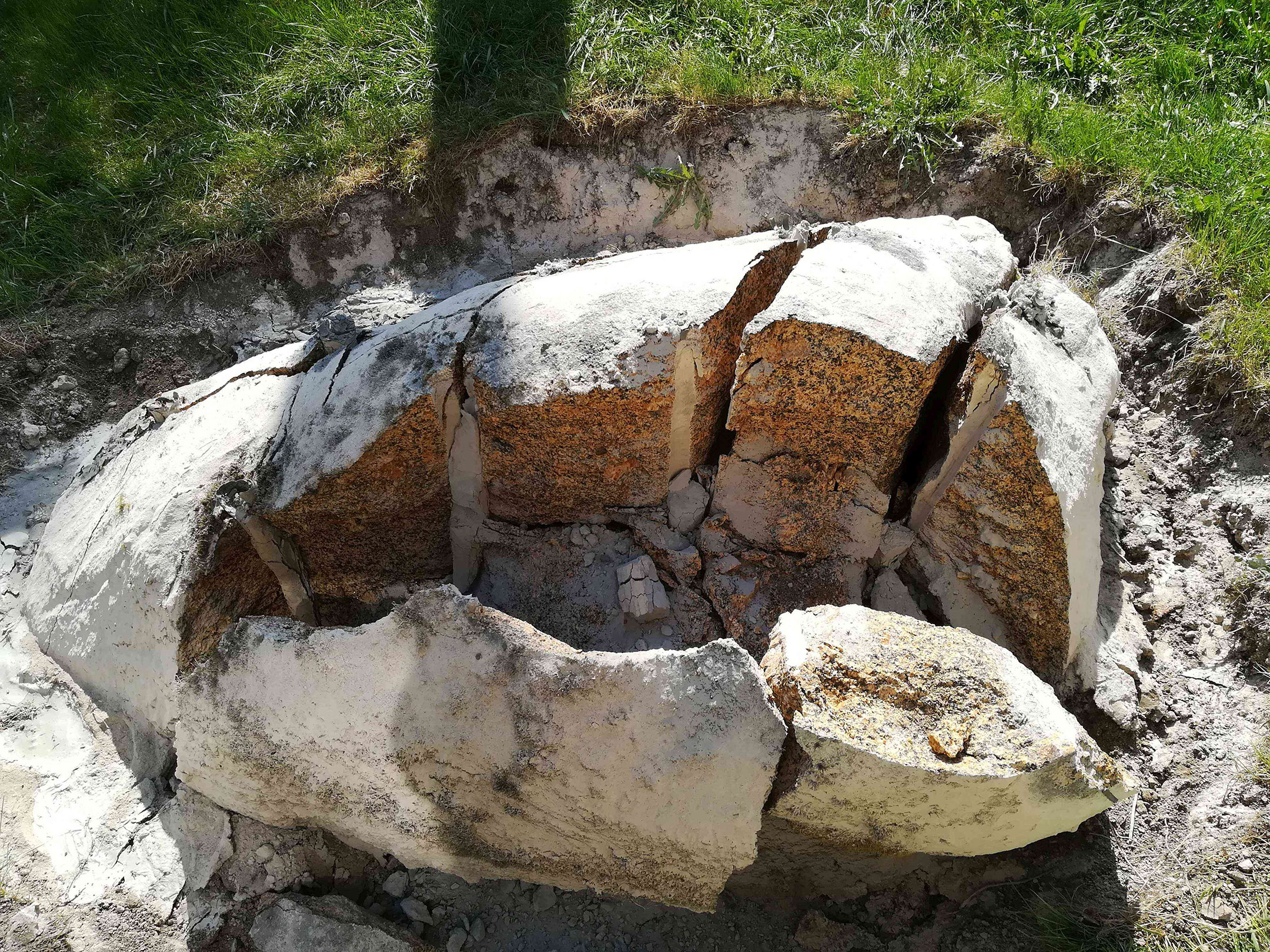
Instead of hammering the concrete apart, you allow internal pressure to fracture it in a controlled way.
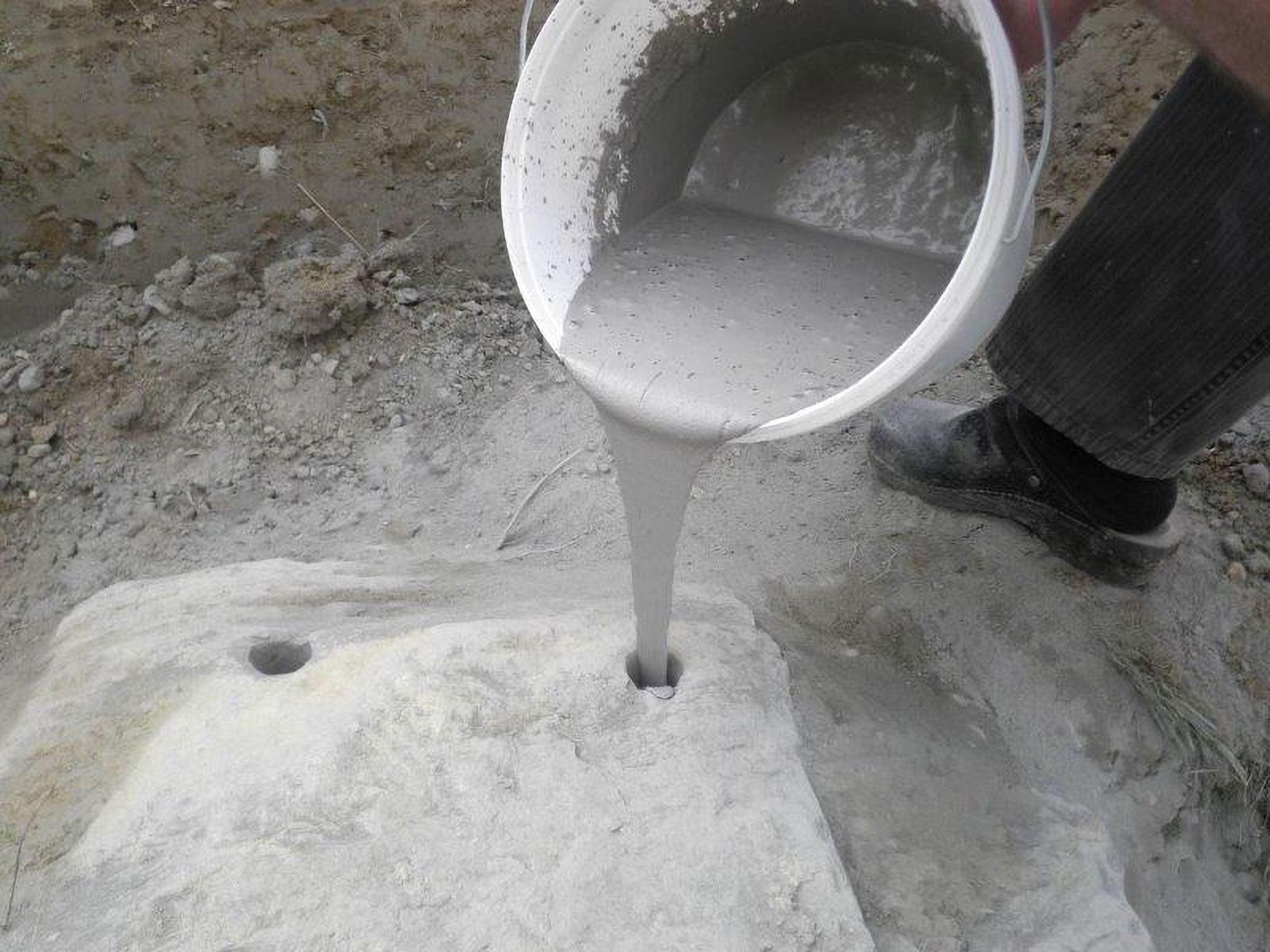
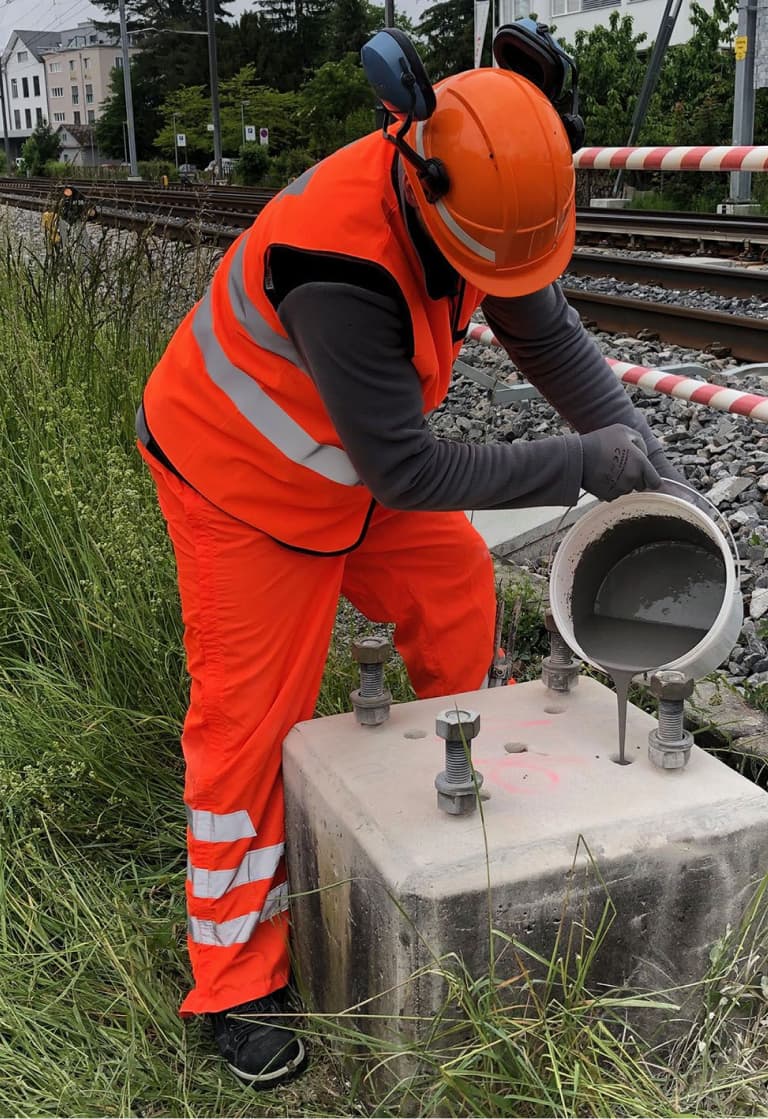
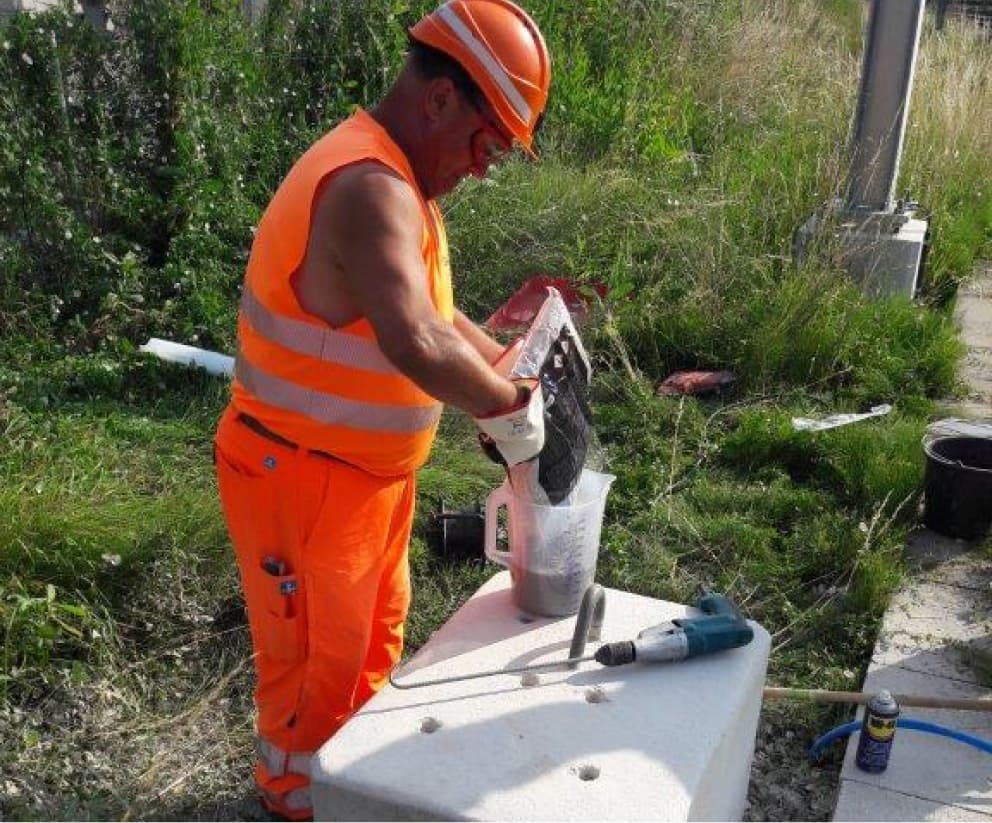
The process is straightforward: Drill → Mix → Fill → Wait
- Drill a pattern of holes into the concrete.
- Mix the material with clean water.
- Pour it into the holes.
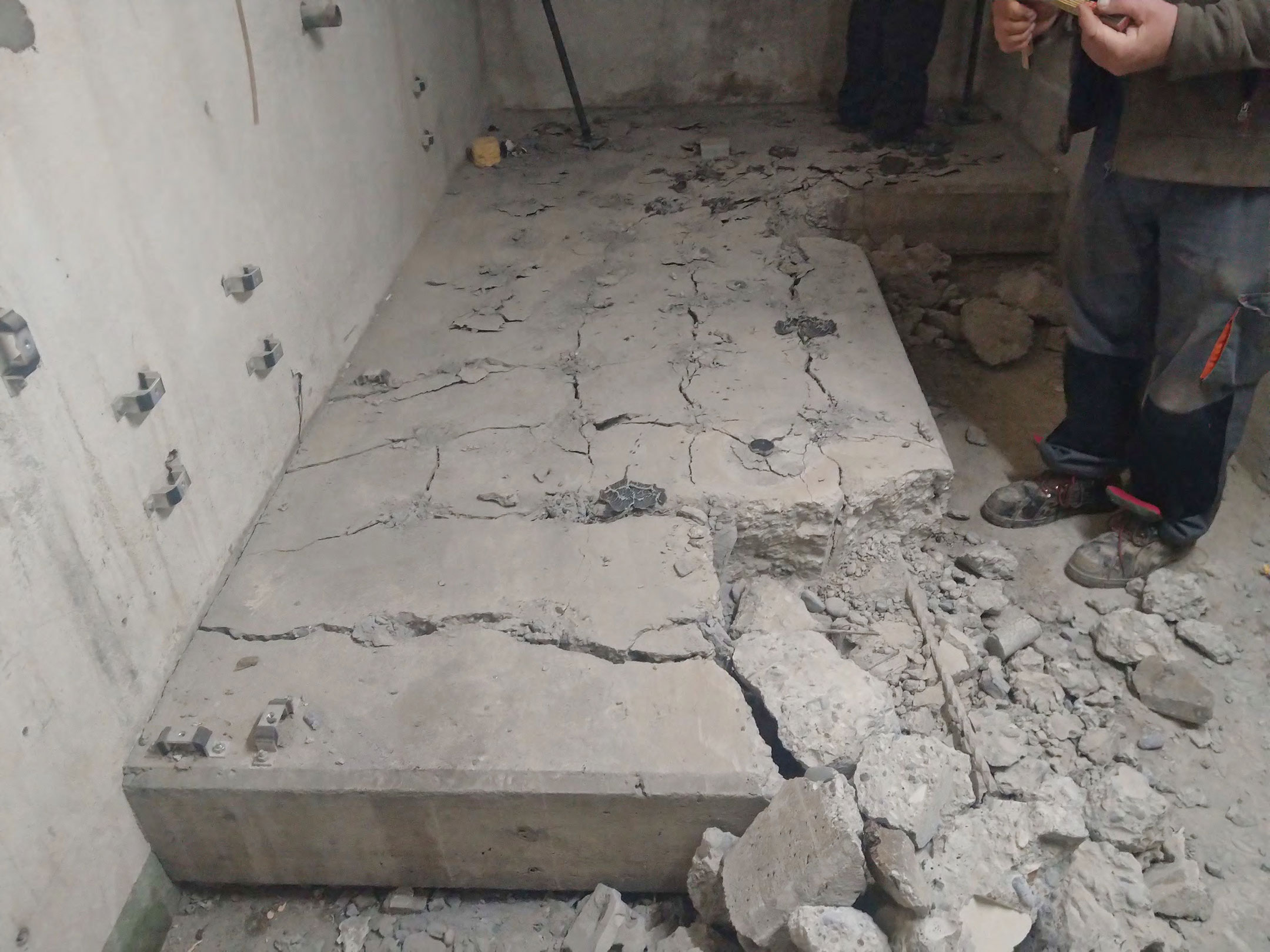
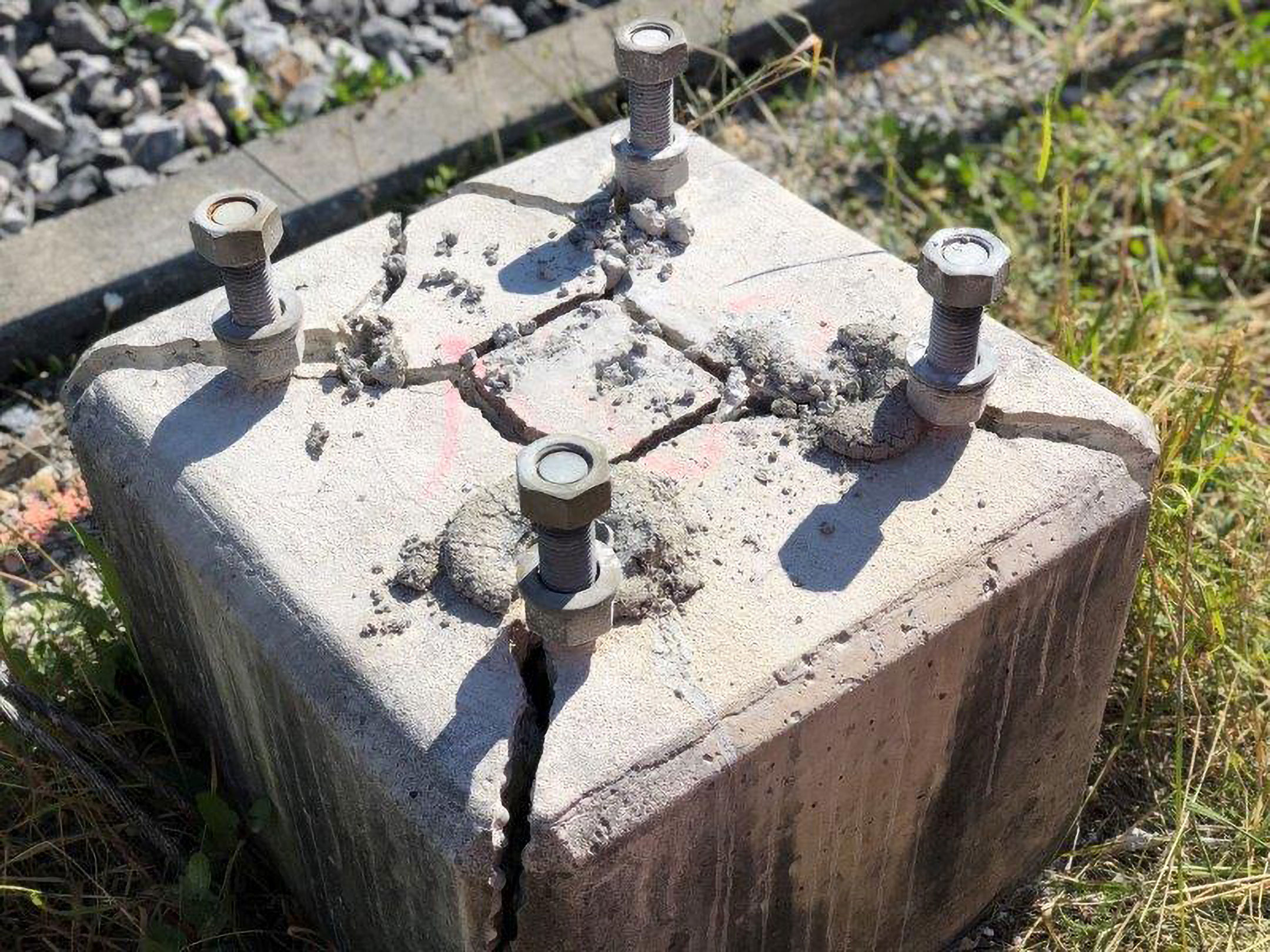
- Allow it to expand and crack the concrete.
With Betonamit® there is no explosion, shockwave or vibration transfer.
That makes it a practical solution for non explosive concrete demolition where structural sensitivity is a concern.
What Is an Expansive Mortar or Grout?
Products described as expansive mortar or expansive grout are cement-based compounds designed to expand as they cure.
Once poured into drilled holes, they generate high expansive pressure over time. That pressure causes the surrounding concrete or rock to crack along natural stress lines.
They are commonly used for:
- Structural slab removal
- Foundation breaking
- Non explosive rock breaking
- Controlled concrete demolition
Importantly, they do not require a blasting licence or specialist explosive handling permits.
For contractors, that keeps compliance simple while maintaining control.
Comparing Impact vs Expansion Methods
The real difference between mechanical and expansive systems comes down to how force is applied.
Impact Methods (Breakers, Peckers)
- Immediate breaking
- High vibration
- High noise
- Faster in open environments
- Greater risk to adjacent structures
Expansion Methods (Non Explosive Systems)
- Gradual cracking
- No vibration
- Minimal noise
- Predictable fracture lines
- Reduced structural risk
Expansion methods are slower in terms of visible results. But on sensitive sites, slower and controlled is often favourable over fast and aggressive.
When Expansion Methods Make Commercial Sense
From a commercial perspective, vibration brings hidden costs.
These can include:
- Structural monitoring
- Insurance concerns
- Repairing unintended cracking
- Neighbour disputes
- Programme delays
Using a non-explosive system reduces those variables.
There’s no need for blasting permits. No specialist explosive certification. No vibration monitoring equipment.
The method itself remains simple and manageable with standard site tools.
Drill the holes accurately.
Mix the compound correctly.
Fill and allow it to expand.
That’s it.
Is Demolition Without Vibration Suitable for Reinforced Concrete?
Reinforced concrete presents additional considerations.
Expansive systems fracture the concrete mass itself. Once cracked, reinforcement bars can be cut using appropriate tools.
This staged approach allows you to:
- Control cracking direction
- Avoid shock loading
- Remove sections methodically
For more detail on this application, see guidance on non explosive concrete demolition.
On refurbishment projects and structural alterations, this controlled sequence is often preferable to repeated heavy impact.
Choosing the Right Approach for Your Site
Not every job requires vibration-free demolition.
If you’re working on an isolated slab in open ground with no retained structures nearby, mechanical breakers may be perfectly suitable.
But ask yourself:
- Is the surrounding structure staying in place?
- Are neighbours within a few metres?
- Are buried services nearby?
- Would visible cracking create disputes?
- Is internal work being carried out in an occupied building?
If the answer to any of these raises concern, reducing vibration becomes a priority.
In those cases, expansion-based systems offer a more controlled method for tackling the job.
When Vibration Control Matters Most
Concrete demolition has traditionally relied on impact.
On modern UK sites, especially in dense or sensitive environments, vibration often introduces more risk than benefit.
Non explosive demolition agents provide a controlled alternative. By generating internal expansion instead of external force, they allow concrete to fracture without shock, noise or specialist explosive licensing.
Where surrounding structures must be protected, demolition without vibration is often the smarter way to work.
Protect surrounding structures and avoid unnecessary risk. Shop BETONAMIT® today for safe, vibration-free concrete demolition.