There are plenty of situations where bringing in a breaker or mini digger simply isn’t practical.
You might be working in a tight rear garden with no access for plant. You could be inside a property where vibration is a concern. The job might be up against neighbouring buildings, under noise restrictions, or limited to removing a small slab, footing or section of foundation.
In these cases, demolition without heavy machinery is about control, access and common sense.
The question isn’t whether concrete can be broken. It’s how to do it without creating more problems than the job itself.
Why Heavy Machinery Isn’t Always the Right Tool
Hydraulic breakers and mechanical plant have their place. On large open sites with full access, they make sense. But they also introduce issues that aren’t always justified on smaller or restricted projects.
Impact breaking brings noise. It sends vibration through surrounding structures. It increases the risk of cracking adjacent masonry and disturbing nearby services. There’s also the cost of plant hire, transport logistics and additional labour.
If you’re only removing a 100–200mm slab, a short run of strip foundation or a set of concrete steps, that level of force can be excessive.
Rather than attacking the surface repeatedly, a more controlled approach is often the better option.
A Controlled Alternative to Mechanical Breaking
One of the most practical methods of demolition without heavy machinery is using BETONAMIT®’s non-explosive demolition agent.
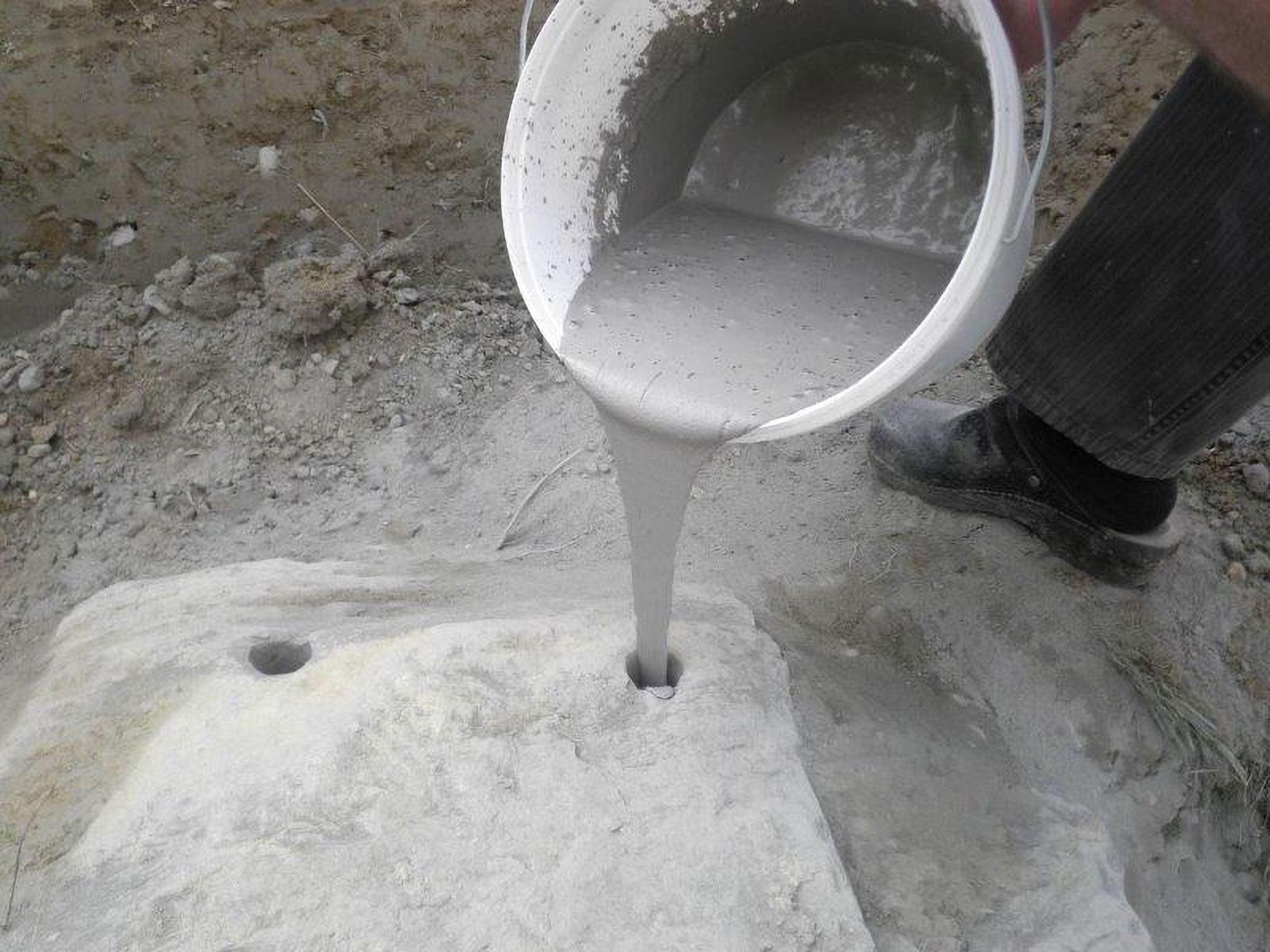
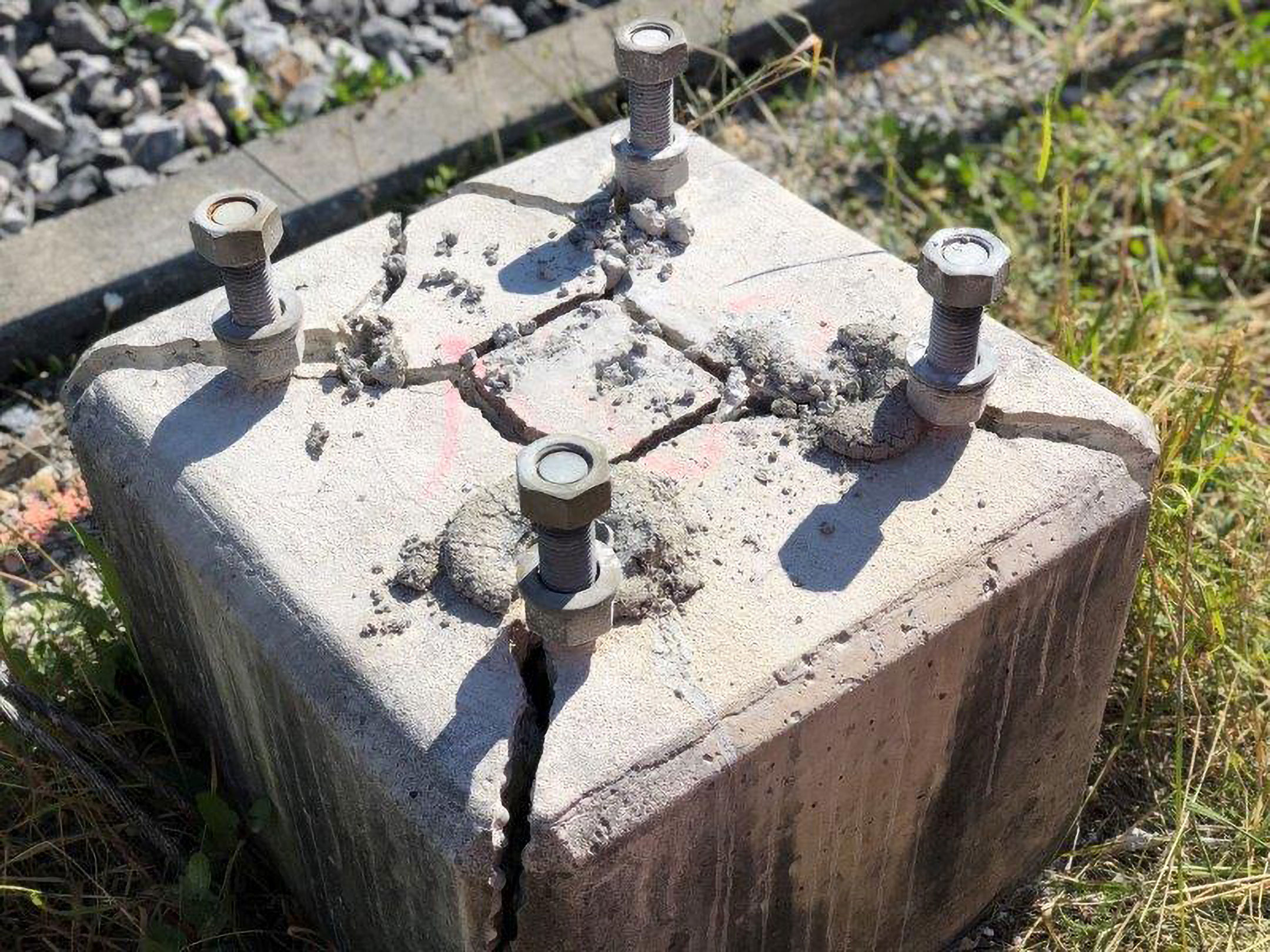
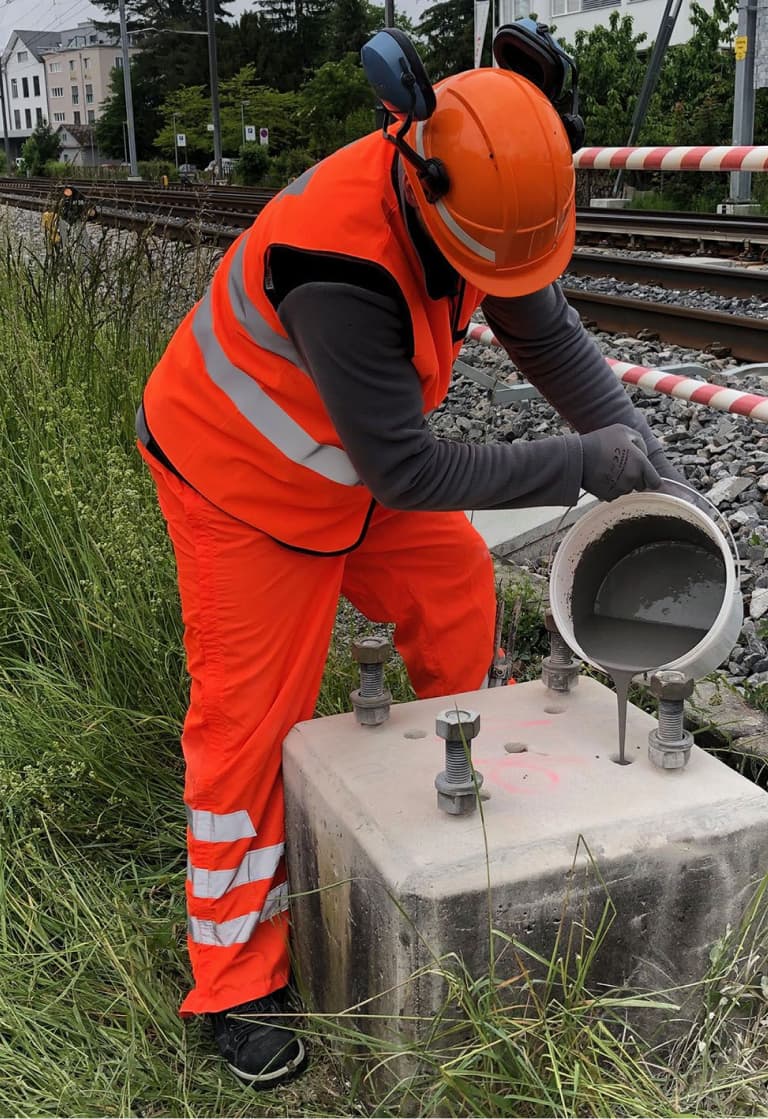
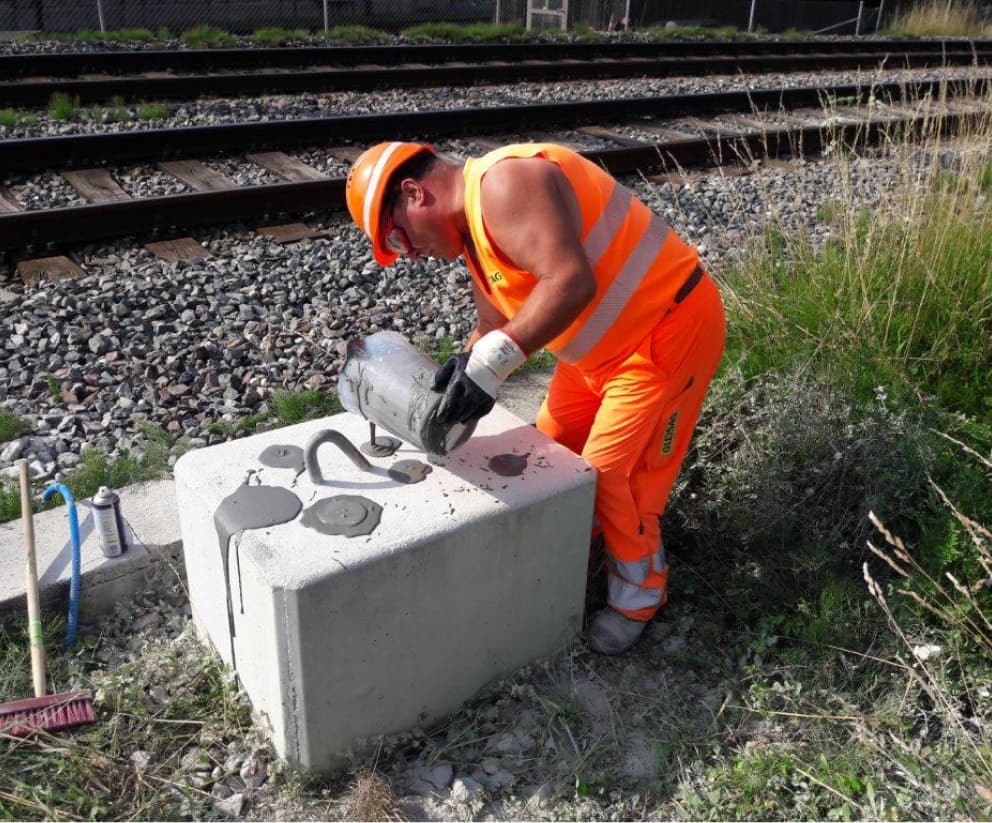
Instead of relying on impact force, you create internal pressure within the concrete itself. The process is straightforward. Boreholes are drilled in a planned pattern, the material is mixed with water, poured into the holes and left to expand. As pressure builds inside the concrete, it fractures along the drilled line.
There’s no breaker attachment.
No shock loading into surrounding structures.
No blasting permits or explosive handling.
Just steady, controlled expansion doing the work from within.
Where This Method Makes Sense
This approach is particularly effective on smaller or sensitive jobs where heavy machinery would create unnecessary disruption.
It’s commonly used for:
•Concrete slabs and bases
•Strip foundations
•Garden paths and patios
•Steps and small structural sections
•Reinforced concrete
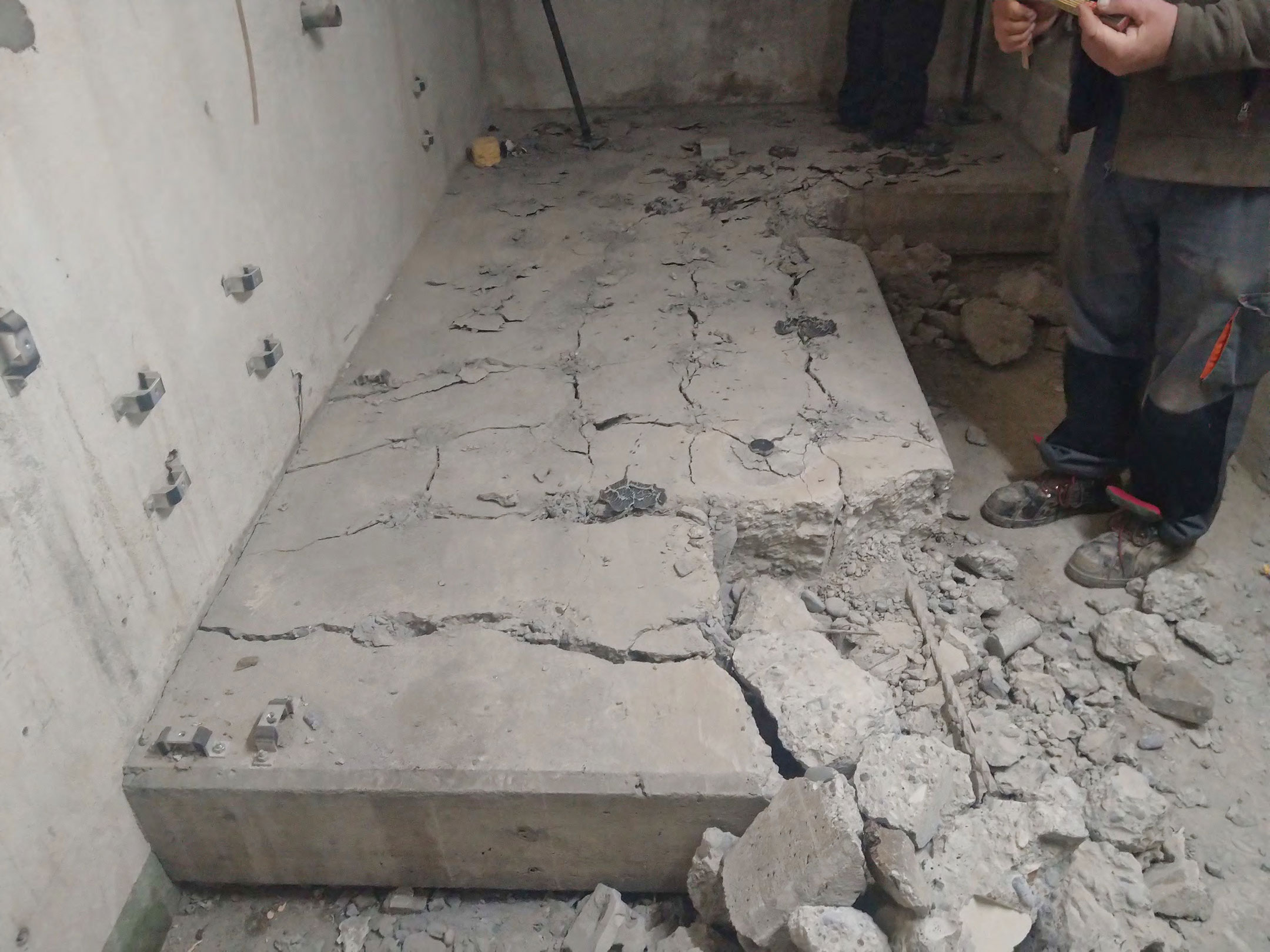
• Internal concrete floors
For domestic removal, see How to Remove a Concrete Floor in a House Safely for a practical step by step approach.
It’s especially suited to residential areas, basement works, confined spaces and sites where access for plant is restricted. If you can get a drill to it, you can break it.
How Demolition Without Heavy Machinery Works in Practice
The key is planning the drill pattern properly. The hole spacing determines how the concrete will crack. You’re guiding the split before anything fractures.
Using an SDS Max or rotary hammer drill, boreholes are drilled vertically to consistent depth and diameter. Accuracy at this stage controls the outcome.
BETONAMIT® is supplied as a dry powder. It’s mixed with clean water to form a workable slurry, similar in preparation to a cement-based product. No specialist equipment is required, just correct mixing and clean water.
The mix is then poured into the drilled holes and left undisturbed. There are no detonators, no ignition sources and no mechanical force applied once the holes are filled.
As the material expands, pressure builds inside the concrete mass. Cracks begin to form along the drilled line. Instead of aggressive hammering, the concrete separates steadily. Once fractured, sections can be lifted out in manageable pieces.
Reinforced Concrete Is Not a Problem
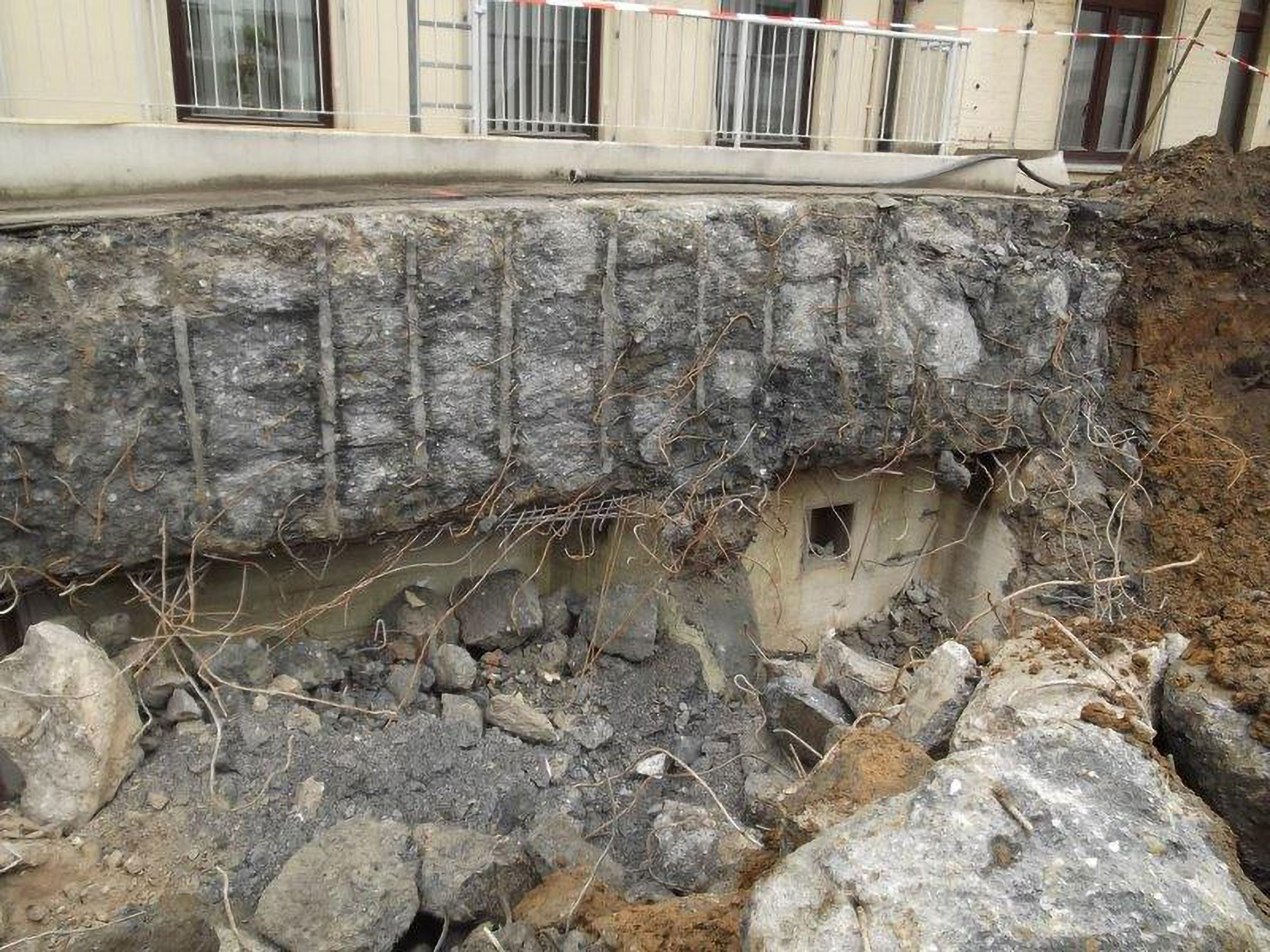
Reinforced sections can be handled in the same way. The expansive mortar fractures the concrete first, exposing the steel. Reinforcement can then be cut separately.
This often produces a cleaner break than trying to hammer directly through reinforced sections, and it avoids unnecessary vibration travelling into surrounding areas.
Why This Is Often Easier Than Jackhammering
Jackhammers transmit vibration through floors and walls. They generate continuous noise and dust. They’re physically demanding and can cause unintended cracking beyond the intended removal area.
With controlled expansion, there is no impact shock. The fracture follows the drill line you’ve set out. Operative strain is reduced, surrounding structures remain stable and noise is limited to the drilling phase.
You’re not fighting the concrete with force. You’re using internal pressure to separate it in a controlled way.
Is Specialist Training Required?
No. BETONAMIT® does not require a blasting licence, explosive storage or specialist demolition certification. It is suitable for builders, groundworkers, landscapers and general contractors who understand drilling and basic site procedures.
The sequence remains simple: Drill → Mix → Fill → Wait
That’s the entire method.
When Demolition Without Heavy Machinery Makes Commercial Sense
On smaller jobs or restricted-access sites, this approach can reduce plant hire costs, transport complications, labour fatigue and the risk of vibration-related damage. It also lowers the chance of neighbour complaints and programme delays linked to excessive noise.
It won’t replace heavy machinery on every project, nor is it meant to. But where access is tight, vibration is a concern or the job size doesn’t justify plant, it’s often the most practical option.
Considering Demolition Without Heavy Machinery?
If you’re facing a job where heavy plant feels excessive or impractical, it’s worth assessing whether controlled expansion would be more suitable.
For a practical comparison of machinery-free concrete breaking, read can you break concrete without machinery?
To plan properly, consider slab thickness, drill hole spacing, borehole depth and whether reinforcement is present. With the correct layout and preparation, concrete can be fractured cleanly without bringing heavy machinery onto site.
Demolition without heavy machinery is often the smarter commercial choice. Less disruption, more control and a method that works with the structure instead of against it.
When heavy machinery isn’t practical, choose a controlled solution. Shop BETONAMIT® now.