Machinery is often seen as the quickest answer for concrete removal. A breaker attachment or hired excavator can make sense on an open site with good access, enough working space and a clear rubble removal route.
But can you break concrete without machinery and is it practical? In the right conditions, yes. The answer depends on job size, access, timeline and the level of control required. For a small concrete base behind a property, a section of internal floor or a slab beside retained structures, avoiding heavy equipment can be the more workable option.
Machinery-free concrete breaking does not mean there is no labour, planning or removal work involved. It means choosing a method that fits the restrictions of the site rather than forcing larger equipment into an unsuitable area.
Why machinery is not always the quickest or cheapest option
Heavy machinery can break concrete quickly once it is in position. However, the time and cost involved in getting plant to site can change the calculation, particularly on smaller jobs.
Machinery hire cost and lead time often offset its speed advantage on smaller projects. There may be delivery charges, minimum hire periods, fuel costs, operator requirements and the time needed to prepare access. A machine also needs enough room to enter and operate safely.
On a narrow side passage, rear garden or internal project, plant access can be the main issue. Removing fences, widening an entrance or transporting equipment through a property can add further work before concrete breaking starts.
For these jobs, the key consideration is whether the full process is practical for the amount of concrete being removed.
Where machinery-free concrete breaking can work well
Manual concrete breaking feasibility is strongest where the work area is small, access is restricted or nearby structures make a controlled approach more important.
Examples include:
- Concrete paths and small bases in rear gardens
- Internal concrete floors with limited access
- Concrete around drainage runs or service routes
- Slabs beside walls, boundaries or retained features
- Small foundations being removed before landscaping work
- Areas where heavy equipment cannot reach the break line
A machinery-free method can also help when noise and vibration need to be managed. A hydraulic breaker or jackhammer may be suitable on an open site, but repeated impact can be disruptive close to neighbouring properties or sensitive building elements.
This does not mean every job should avoid machinery. Large volumes of concrete, open demolition areas and tight programmes may still favour mechanical equipment. The practical choice comes from assessing the full site setup.
Using BETONAMIT® instead of heavy equipment
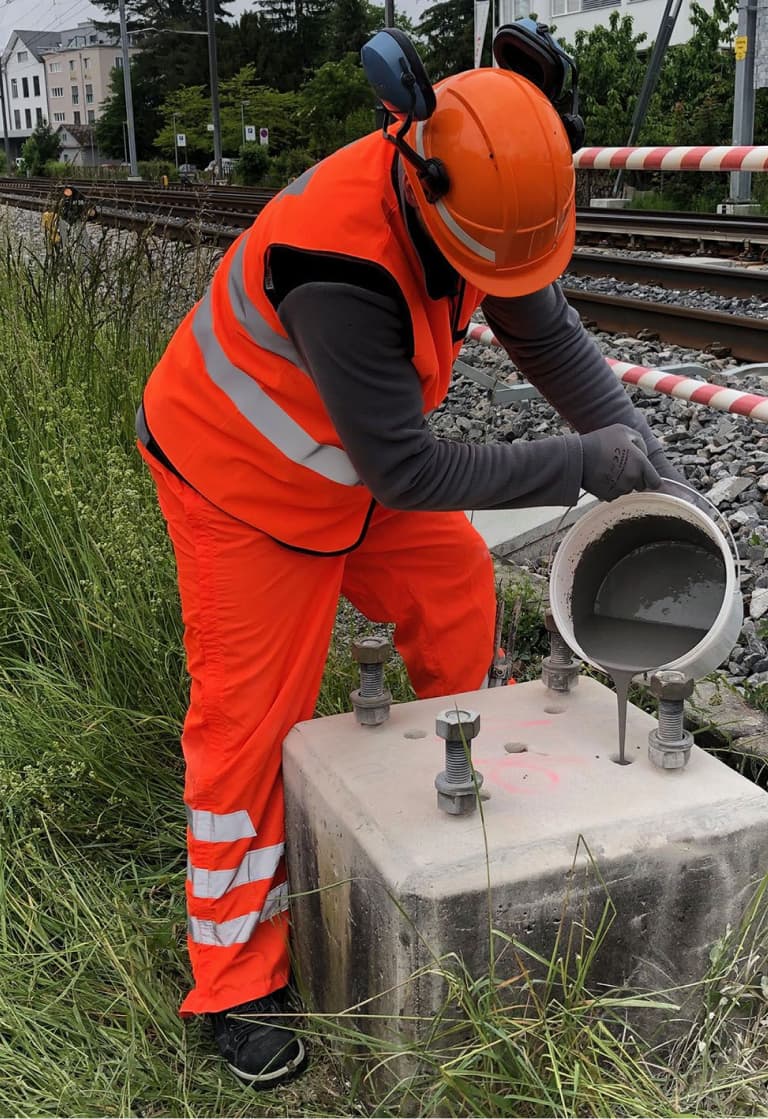
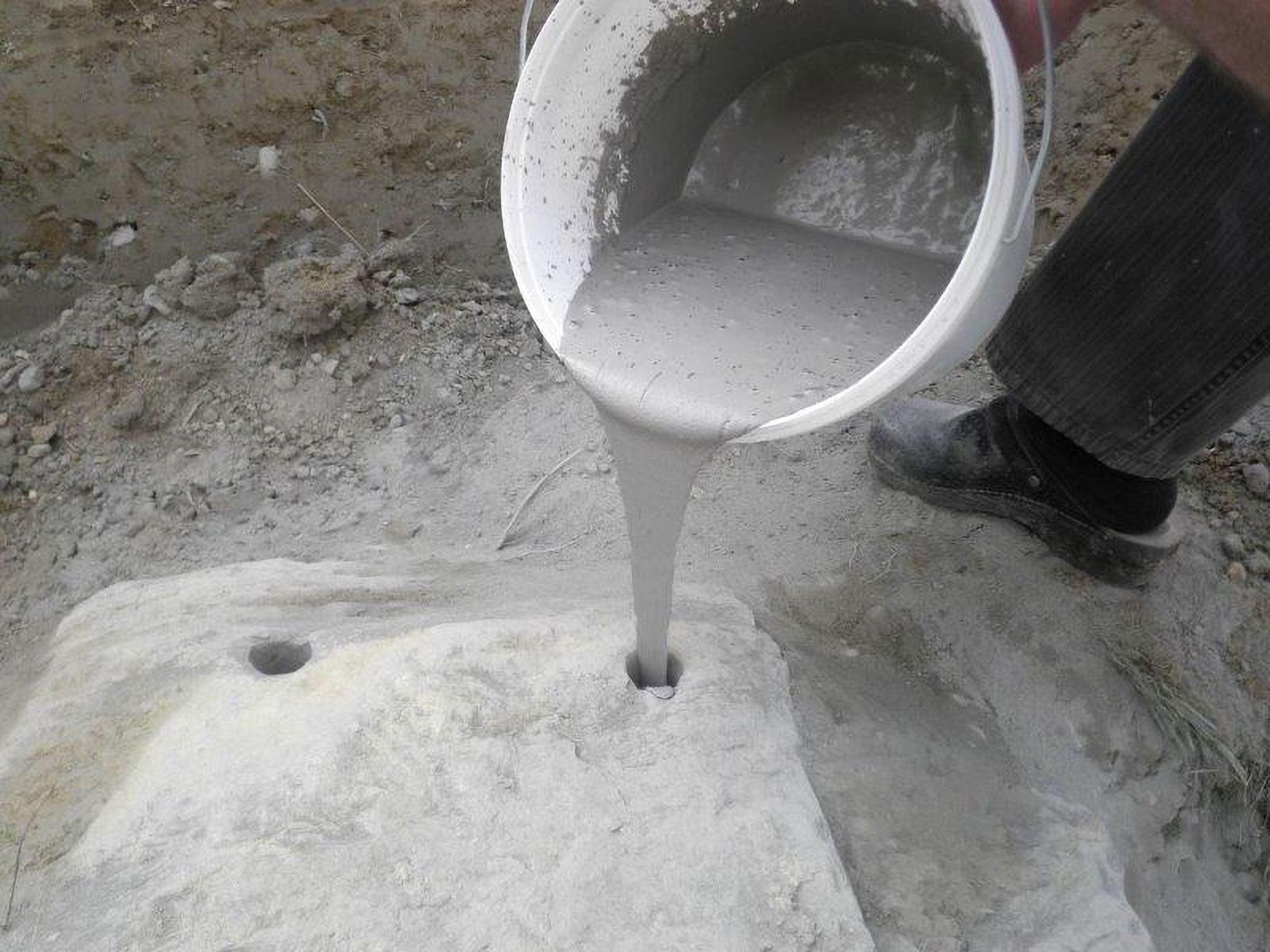
BETONAMIT® is a non-explosive demolition agent for controlled breaking of concrete, rock and stone. It works through expansion inside drilled holes rather than repeated impact at the surface.
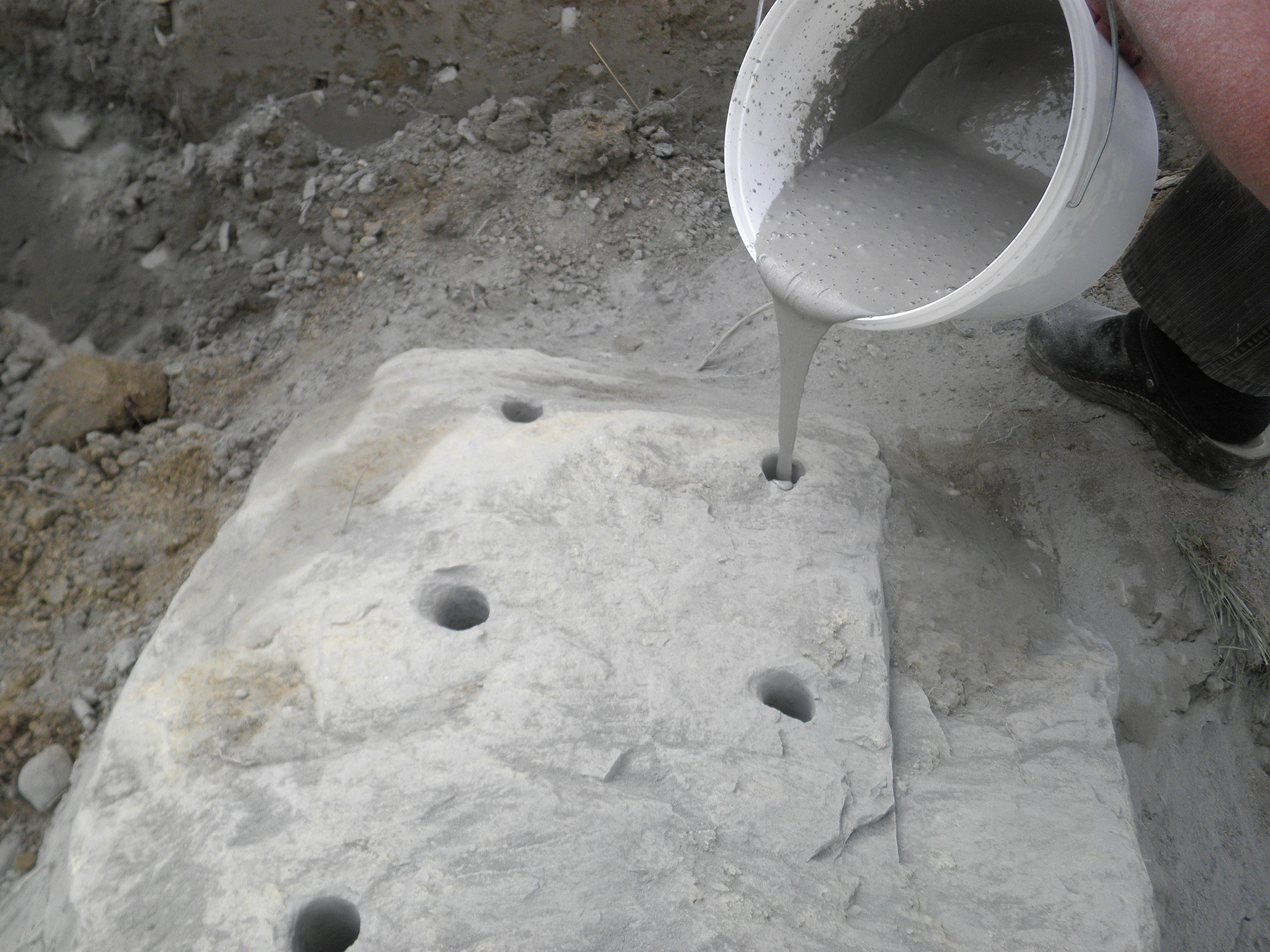
The application process is straightforward: Drill, Mix, Fill, Wait.
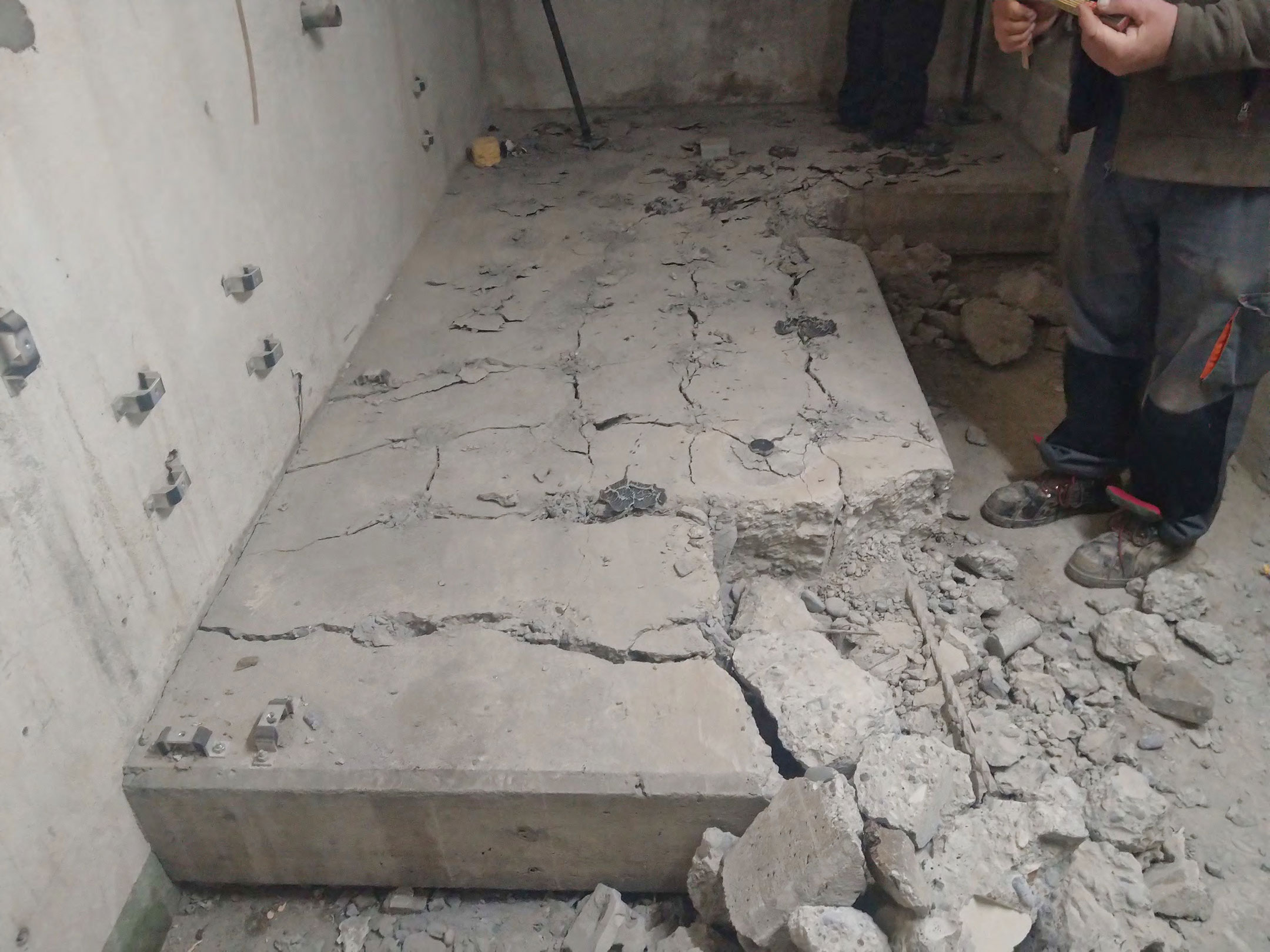
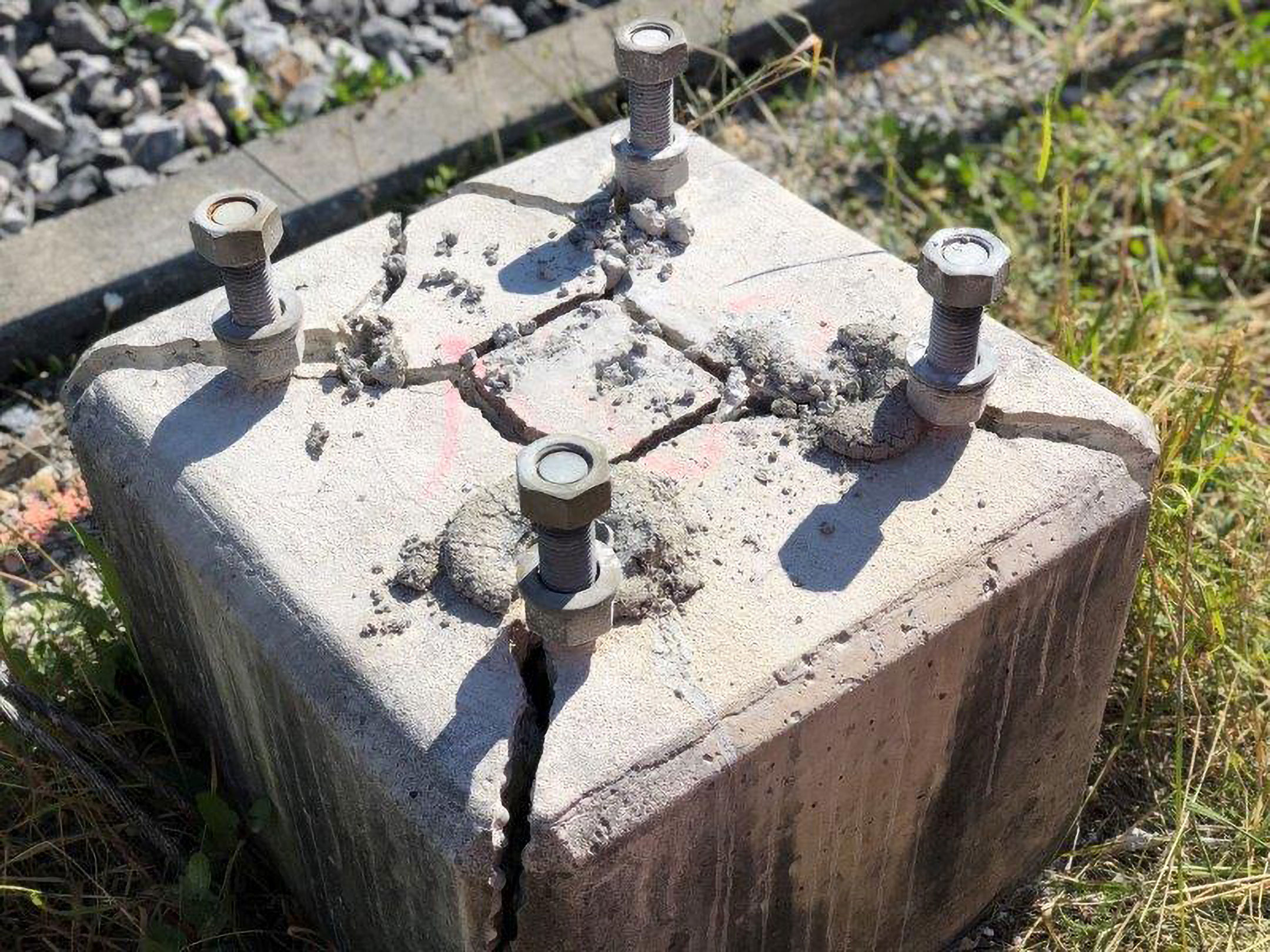
Holes are drilled into the concrete, BETONAMIT® is mixed with water as directed, then placed into the holes. The material expands gradually and can fracture the concrete along the planned borehole pattern.
This is useful where a drill and materials can be carried into the work area but an excavator or breaker cannot. It can also suit jobs where dividing concrete into manageable sections is more practical than breaking it up with large equipment.
Is non-explosive demolition practical? It can be where access, vibration or control are the main constraints. BETONAMIT® does not remove the need for a proper work plan. The material, reinforcement, borehole pattern, nearby structures and removal route all need to be considered before work begins.
Explore non explosive concrete demolition for more information on controlled concrete breaking with BETONAMIT®.
When machinery-free methods are less practical
Avoiding heavy equipment is not always the best choice. On a large, open site with straightforward access and a substantial volume of concrete to remove, mechanical breaking may be more suitable.
Concrete demolition without heavy equipment time can be longer because expansive breaking requires drilling, mixing and time for the concrete to crack. It also requires a planned removal process once the material has fractured.
Machinery-free methods may be less suitable where:
- A large volume of concrete must be removed quickly
- The programme does not allow time for gradual cracking
- Safe drilling access is not available
- Reinforcement or structural conditions require a different approach
- Large broken sections cannot be handled or removed safely
- The site has open access for suitable mechanical equipment
A non-explosive method should not be viewed as a direct replacement for every breaker or excavator. It is a practical alternative where the job conditions support controlled breaking.
Time, cost and job size
Machinery-free concrete breaking cost is not only about the product or tool being used. Consider the wider costs of access preparation, machinery hire, delivery, fuel, labour and rubble handling.
A small job can become more expensive if plant has to be hired for a short period, moved through limited access or used for only a small area of concrete. In contrast, a bigger site may justify machinery because the volume of work allows the equipment to be used efficiently.
Time should be assessed in the same way. A breaker may crack concrete quickly, but the overall job can still be slowed by equipment access, noise restrictions, debris management and the need to protect nearby structures.
BETONAMIT® supports a more precise break sequence where concrete needs to be removed in smaller sections. Non-explosive methods can match machinery on precision for structural and confined work, where the objective is controlled separation rather than rapid bulk removal.
Quality and precision on restricted sites
The quality of demolition is not only measured by how quickly concrete is broken. It also depends on whether the material can be removed without affecting the areas that must remain in place.
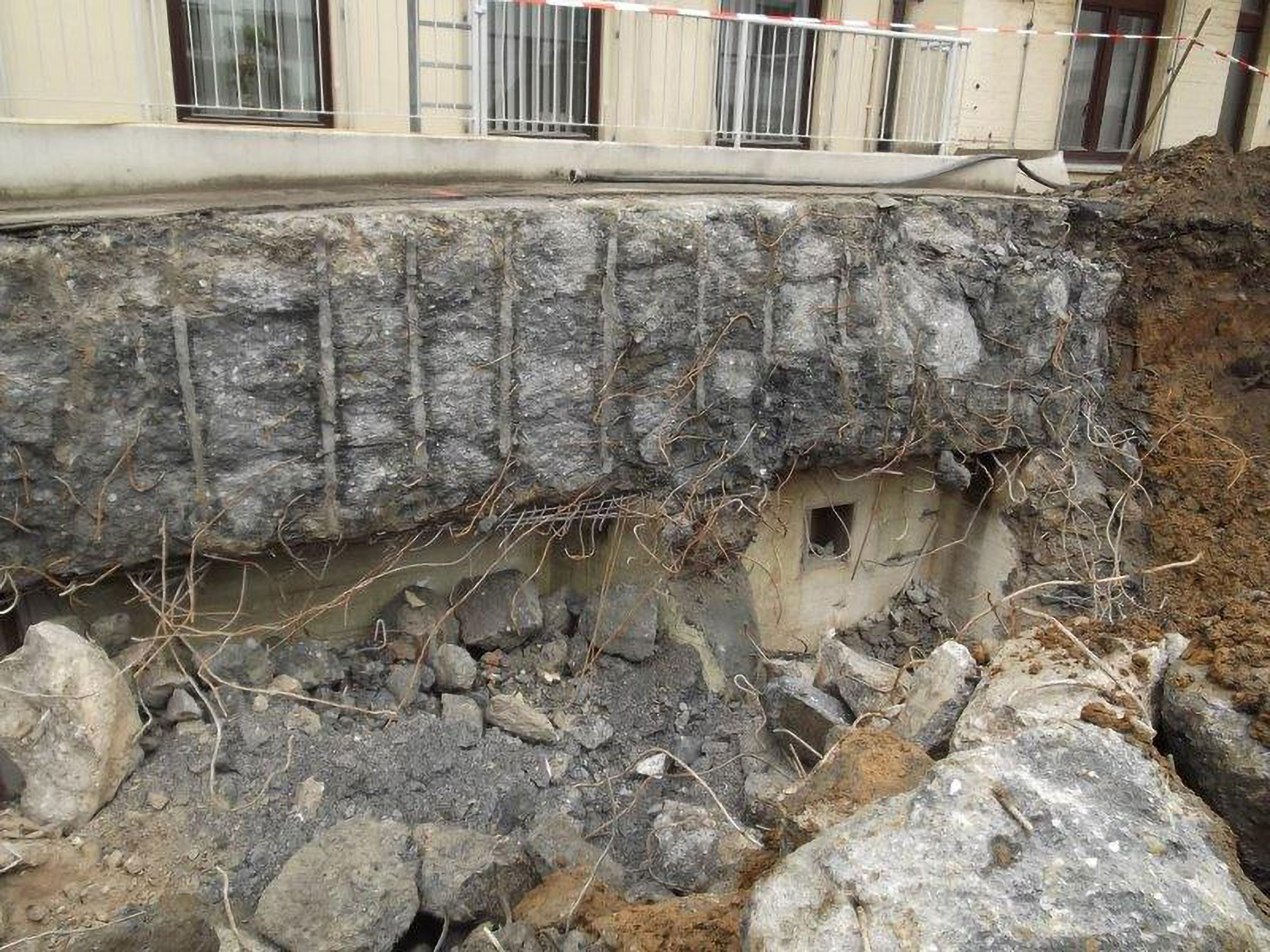
Where a slab runs close to a wall, drainage route or retained foundation, a planned borehole layout may give greater control over where cracking occurs. This can make it easier to separate the concrete into manageable sections for removal.
Mechanical breaking may still provide the right result where there is space to work and no sensitive constraints nearby. However, a controlled approach is more practical when precision matters more than speed.
For step-by-step guidance after deciding that heavy machinery is not required, read how to break concrete without heavy machinery.
A practical checklist before deciding
Before choosing how to break concrete, check:
- How much concrete needs to be removed
- Whether machinery can access and work safely on site
- The available programme for breaking and removal
- Nearby walls, structures, services and boundaries
- Noise and vibration constraints
- The route for taking rubble away
- Whether the concrete can be divided into manageable sections
The right method depends on these combined factors. Do not choose a method based on speed alone.
Plan a controlled concrete removal job
Breaking concrete without machinery can be practical when the job is small, access is restricted or a controlled break sequence is needed. On larger open sites with demanding timescales, machinery may remain the more suitable option.
If BETONAMIT® suits the material and site conditions, use our required material calculator to estimate the quantity of expansive mortar needed from your confirmed boreholes. Then use our approved instructions and plan the work around safe access, material handling and site controls.