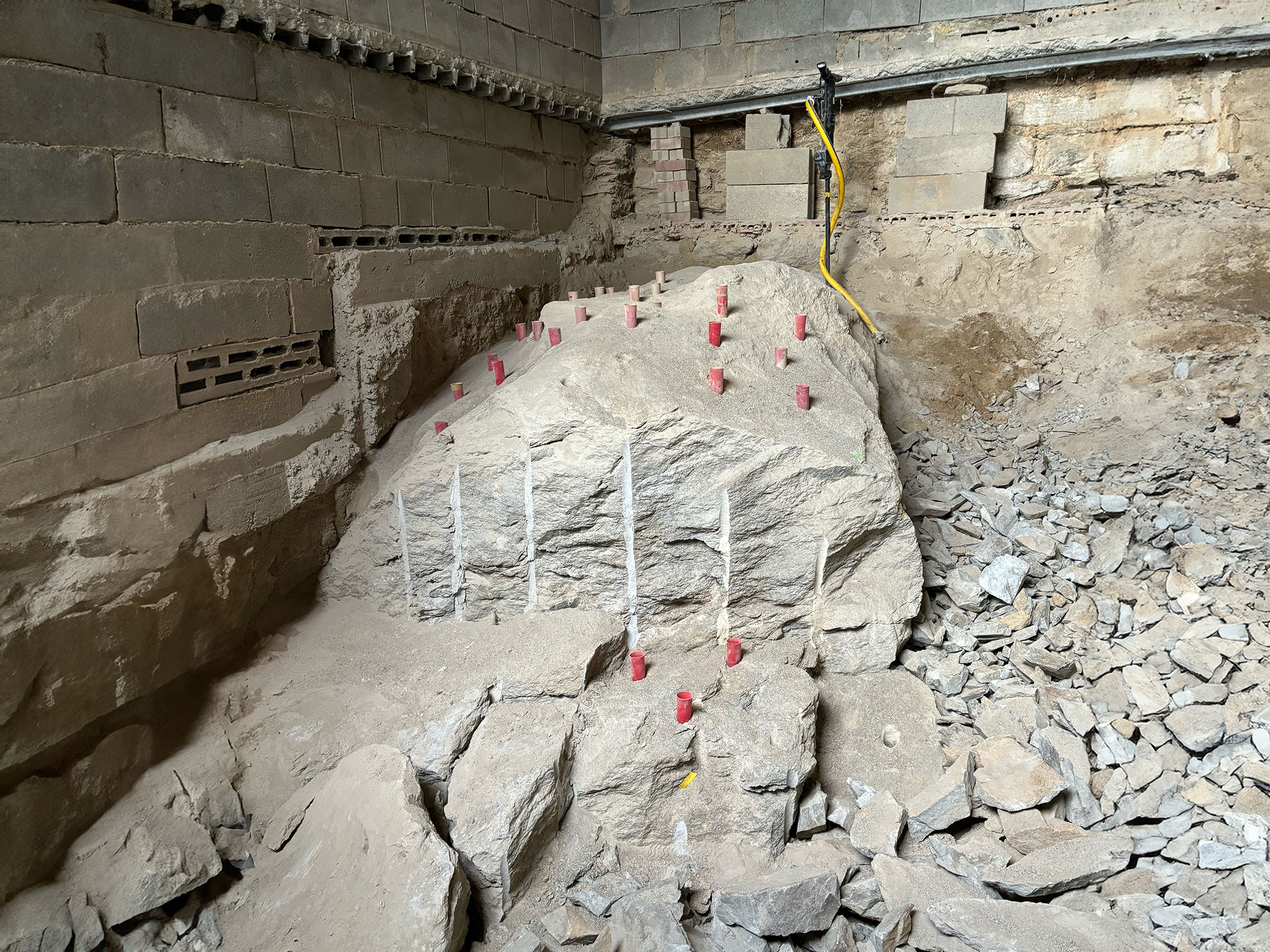
Small sites can make demolition difficult long before the material itself becomes the problem. A concrete base behind a terraced house, rock in a narrow garden or a footing beside an extension may leave little room for machinery, vehicle movements or debris handling.
In these situations, the best demolition method is often the one that works around access, nearby structures and the available working space. For many small and restricted sites, that means looking beyond high-impact mechanical breaking and considering a controlled non-explosive demolition agent.
Why small and restricted sites rule out certain methods
Demolition methods for confined sites need to be chosen around the full working area, not only the concrete, stone or rock being removed.
A large excavator and hydraulic breaker may be practical on an open plot with clear access. On a narrow residential site, however, there may be no suitable route for plant to enter, turn or operate safely.
Even where a machine can reach the area, its movement, working radius and the space needed for material handling can make the job harder to manage.
Small site demolition options also need to account for:
- Limited access through gates, alleys or existing buildings
- Neighbouring properties close to the break area
- Restricted room for skips, spoil heaps and delivery vehicles
- Noise and vibration concerns
- Difficult routes for removing broken material
- Existing structures, services and boundaries
Adjacent structures are often the main risk factor on small sites. A method that creates aggressive impact, debris movement or difficult-to-control cracking may be less suitable where a wall, retaining feature, extension or boundary is close by.
The access problem: getting machinery in and debris out
Restricted access affects the whole demolition sequence. It is not only about getting a breaker or excavator to the material. Plant needs enough room to work, operators need a safe position and broken concrete or rock still needs to be removed.
A driveway may be too narrow for larger machinery. A rear garden may only be accessible through the house or a side passage. An urban site may have limited space for deliveries, skip placement and material storage.
Manual demolition can be an option for smaller sections, but it is often slow and physically demanding. Jackhammers also create vibration and noise that are difficult to manage close to neighbouring properties.
For demolition with restricted access, consider how the material will be divided into manageable pieces before work begins. A planned break line can make removal easier and reduce the need to bring larger machinery into a tight space.
Why explosive demolition is rarely viable for small or urban sites
Regardless of licensing, most small UK sites are unsuitable for explosive demolition. The main issue is often the limited space around the structure, nearby buildings, public areas and the need to control the effect of the work.
Explosive demolition requires specialist planning and is generally associated with projects where the site layout, exclusion area and surrounding conditions allow it. A small garden plot, confined commercial yard or residential extension site rarely provides that level of separation.
If licensing or regulatory requirements are the main concern, read demolition without a blasting license. For a broader overview, see our guide to options for demolition without a blasting license.
On small sites, the more immediate question is usually practical: how can the material be broken in a controlled way without relying on large machines or a high-impact approach?
Non-explosive alternatives suited to confined working areas
Mechanical breakers, cutting equipment and manual methods all have a place, depending on the material, site access and required break line. Mechanical breaking may remain suitable where access is sufficient and vibration, noise and debris can be properly managed.
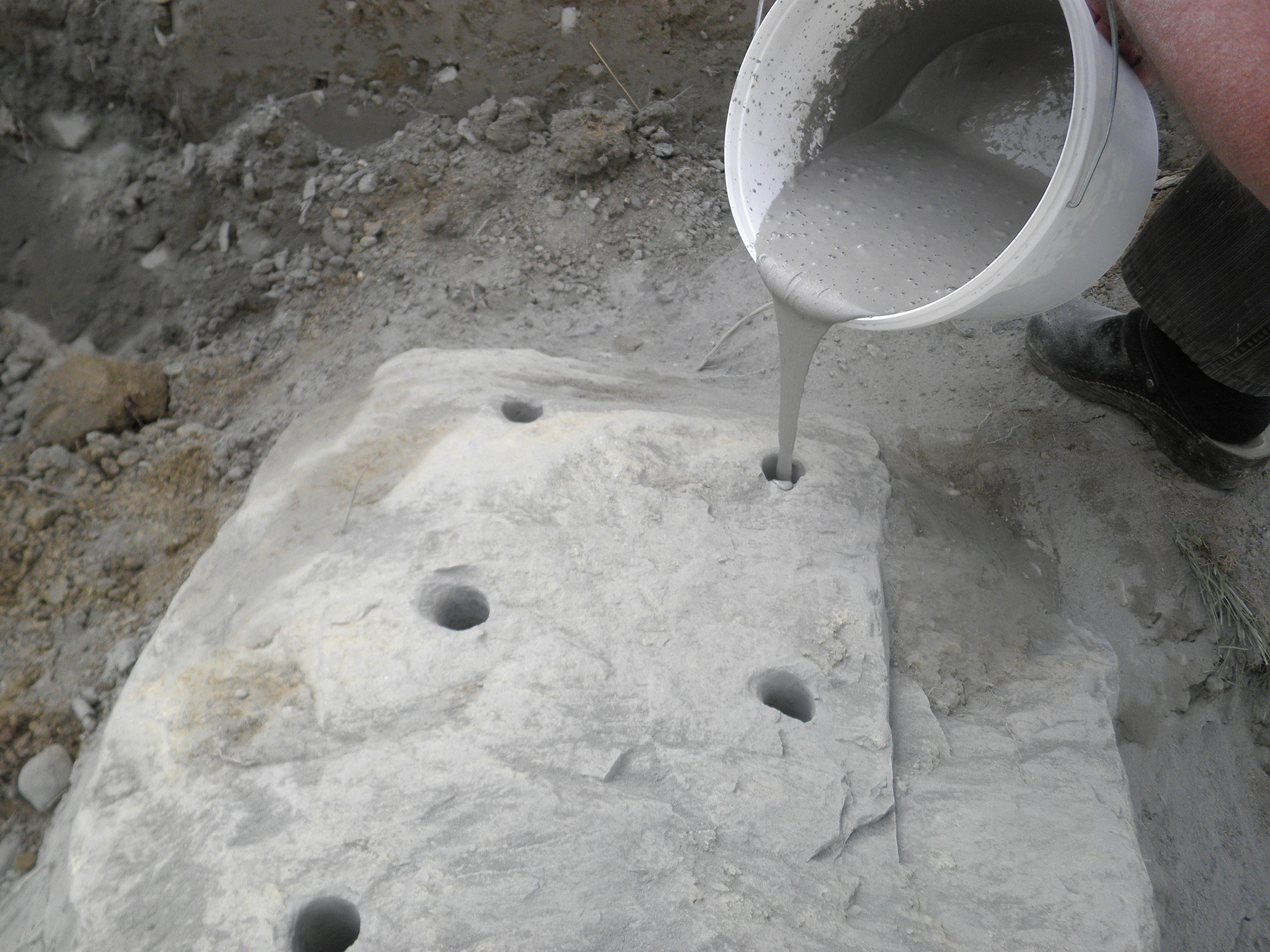
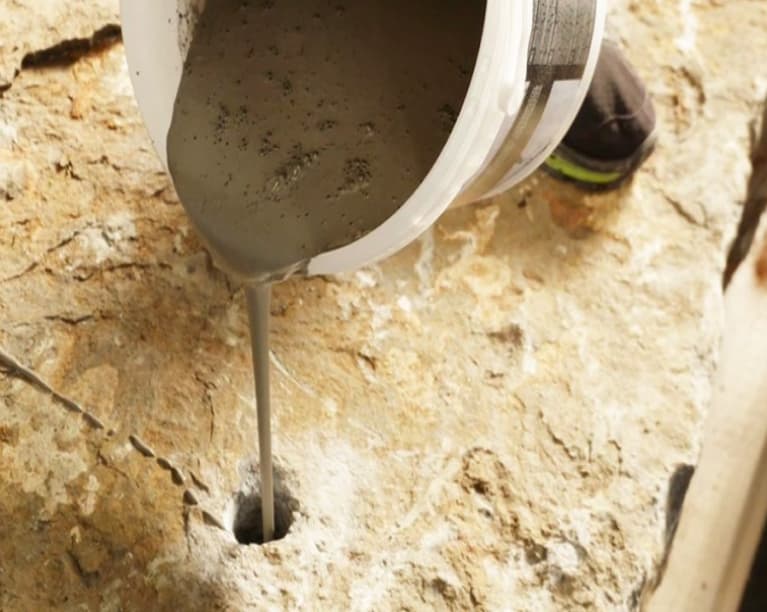
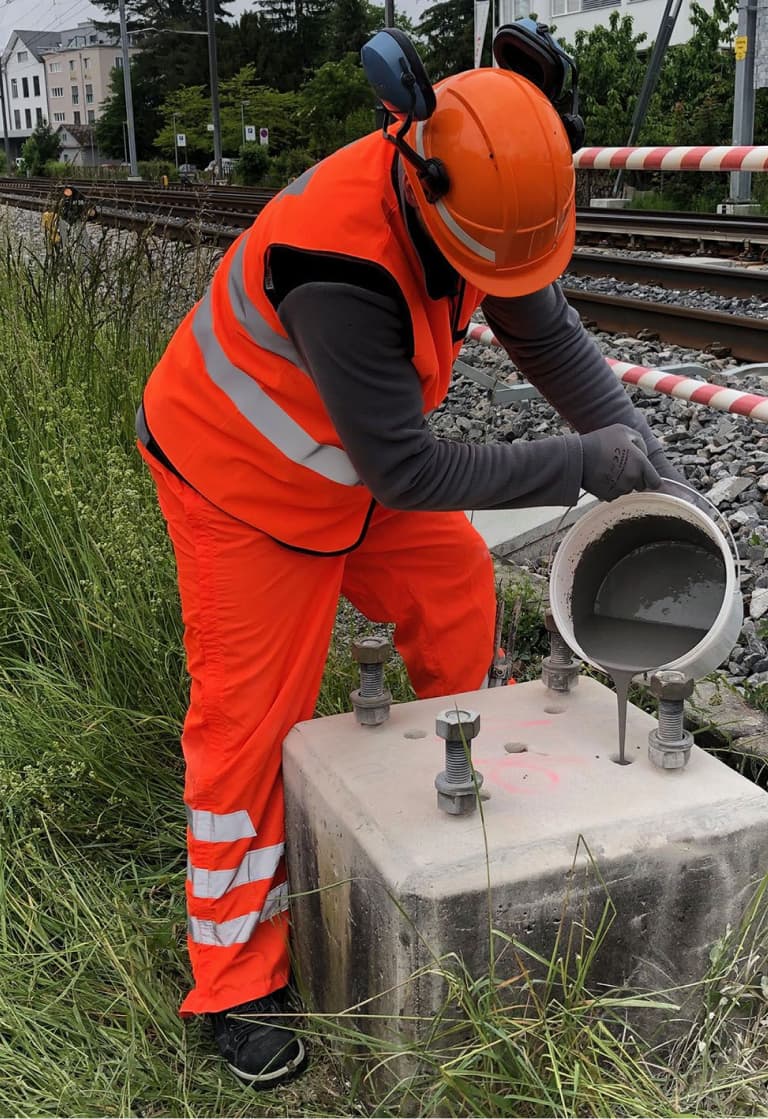
BETONAMIT® offers another option for concrete, stone and rock breaking. It is an expansive mortar that works through controlled expansion after being mixed with water and placed into drilled holes.
The process is straightforward: Drill > Mix > Fill > Wait.
BETONAMIT® expands gradually within the drilled material, which can cause it to crack along the planned borehole pattern.
Non-explosive agents need only drilling access, not machine access, for the breaking process. This can be useful where a contractor can carry a drill and materials into the work area but cannot bring in an excavator or hydraulic breaker.
BETONAMIT® is often suitable where controlled breaking is preferred around restricted access, nearby structures or sensitive site constraints. It does not remove the need for suitable planning. Borehole positions, the material condition, reinforcement and the intended break line all need to be considered before work starts.
Protecting neighbouring structures during small site demolition
Working next to other buildings changes the level of control required. This may include:
- Attached properties
- Retaining walls
- Garden walls
- Paving
- Drainage runs
- Structures that need to remain in place
Mechanical breaking can transfer impact through the material and surrounding ground. It can also create unpredictable fragments once concrete begins to fail. A controlled, gradual breaking method is worth considering where vibration from a jackhammer could be disruptive.
No demolition method is suitable for every site. Always check for hidden services and structural risks before work begins. Seek competent professional advice where the work involves structural elements, retained sections or complex conditions.
The right method depends on the material, access, working space and the effect that breaking could have on the surrounding area.
Planning debris removal in tight spaces
Breaking the material is only one part of the job. On a small site, the removal plan can have as much influence on the method as the demolition itself.
Think about where cracked sections can be safely placed, how they will be moved and whether barrows, mini dumpers or manual handling routes are practical. Avoid creating piles that block access or make the next stage of work harder.
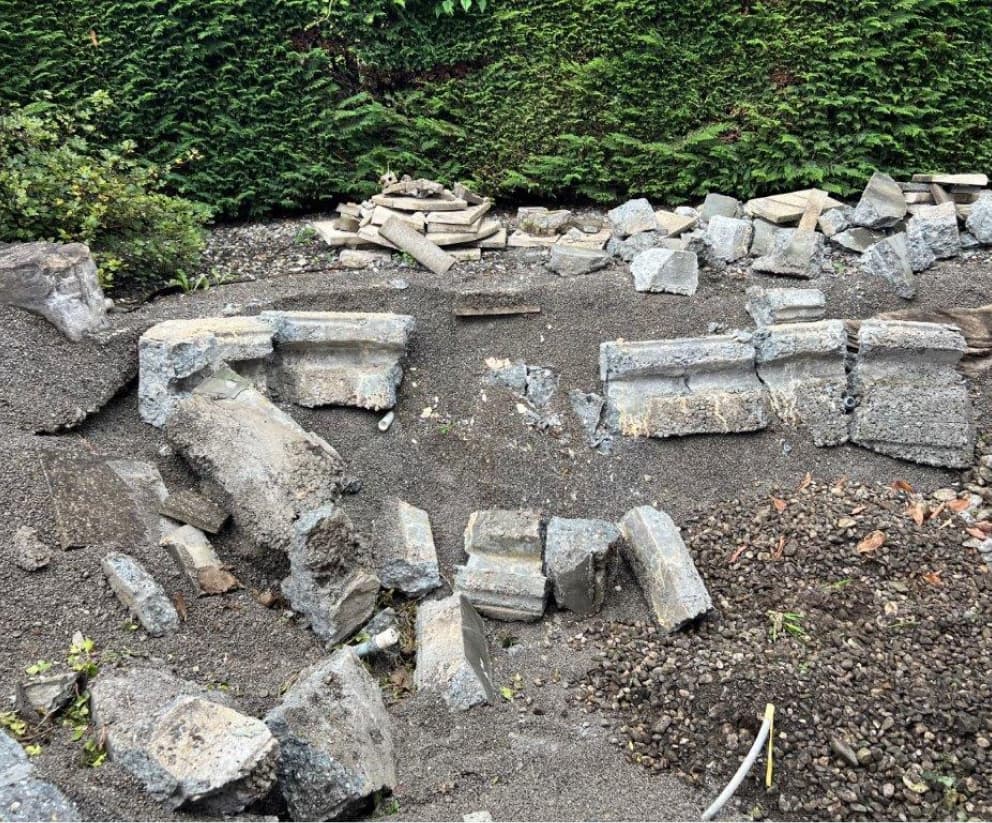
A controlled break sequence helps to divide a slab, footing, boulder or stone feature into more manageable pieces. This can support a more organised removal process where access is limited and space needs to be kept clear.
Before ordering, use our material consumption calculator to work out an estimated BETONAMIT® quantity from your confirmed borehole details. Project conditions may affect final requirements, so always review the approved instructions before use.
Choosing a practical method for a small site
Small sites demand realistic planning. Heavy machinery may still be the right choice where access and space allow it.
Where those conditions are limited, BETONAMIT® provides a practical alternative to explosive demolition for small sites by allowing controlled breaking with drilling access.
If you are planning concrete, stone or rock removal in a confined area, discuss the project with Betonamit or shop now if you are ready to get started.