Concrete is designed to take load, resist pressure and last for decades. So when it needs removing, it’s usually tough going.
That’s where expanding grout comes in.
Rather than attacking concrete with impact tools or explosives, expanding grout works from the inside. It applies steady internal pressure that forces the material to crack along a planned line. No detonation. No repeated hammering.
It’s a controlled method of demolition that relies on pressure, not shock.
How Expanding Grout Works
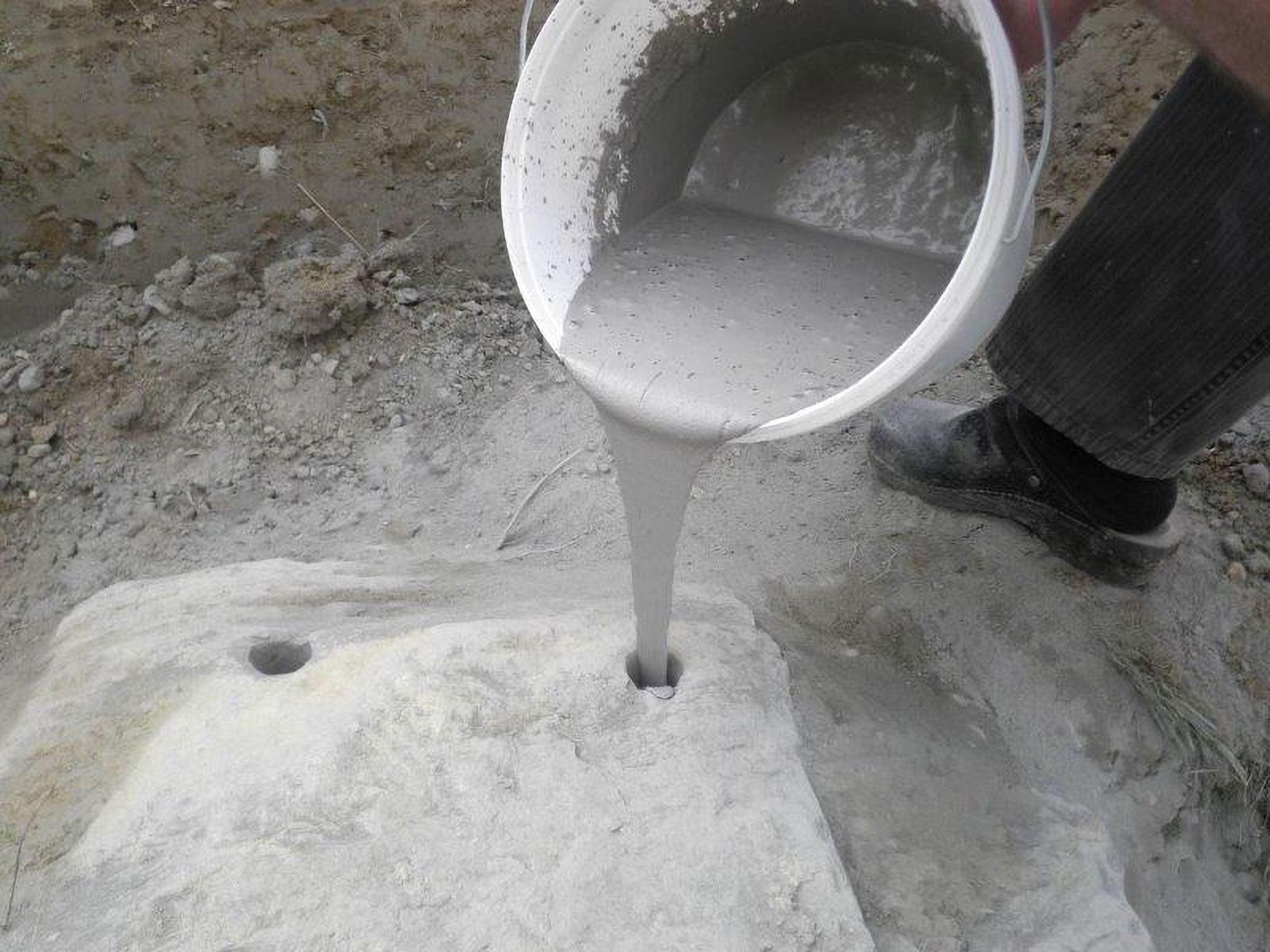
Expanding grout is a dry powder compound that is mixed with water and placed into drilled holes in concrete or rock.
Once inside the borehole, a chemical reaction begins. As the material cures, it increases in volume. Because the grout is confined within the hole, that expansion creates powerful outward pressure against the walls of the concrete.
Concrete handles compression extremely well.
It does not handle internal tensile stress well.
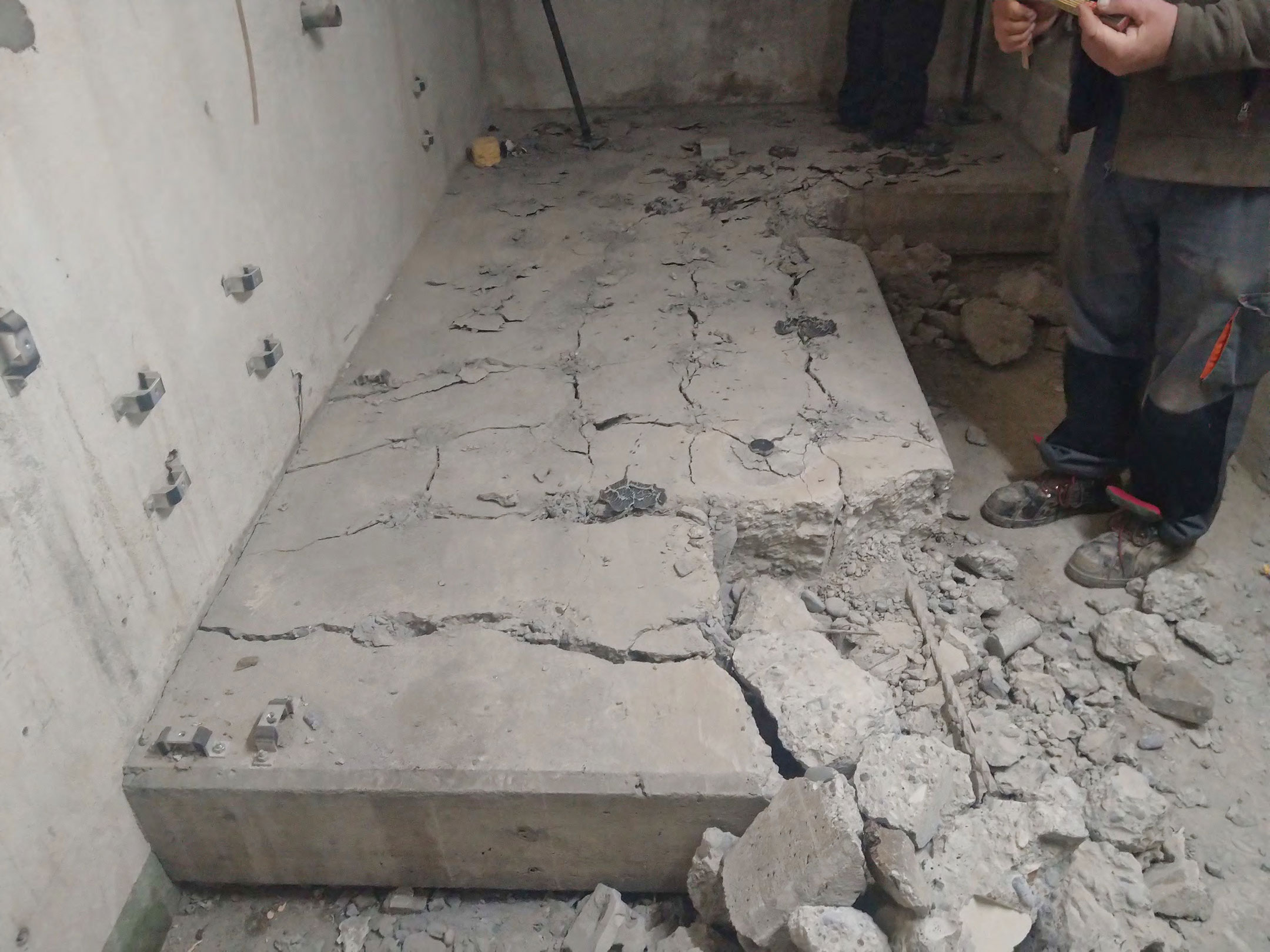
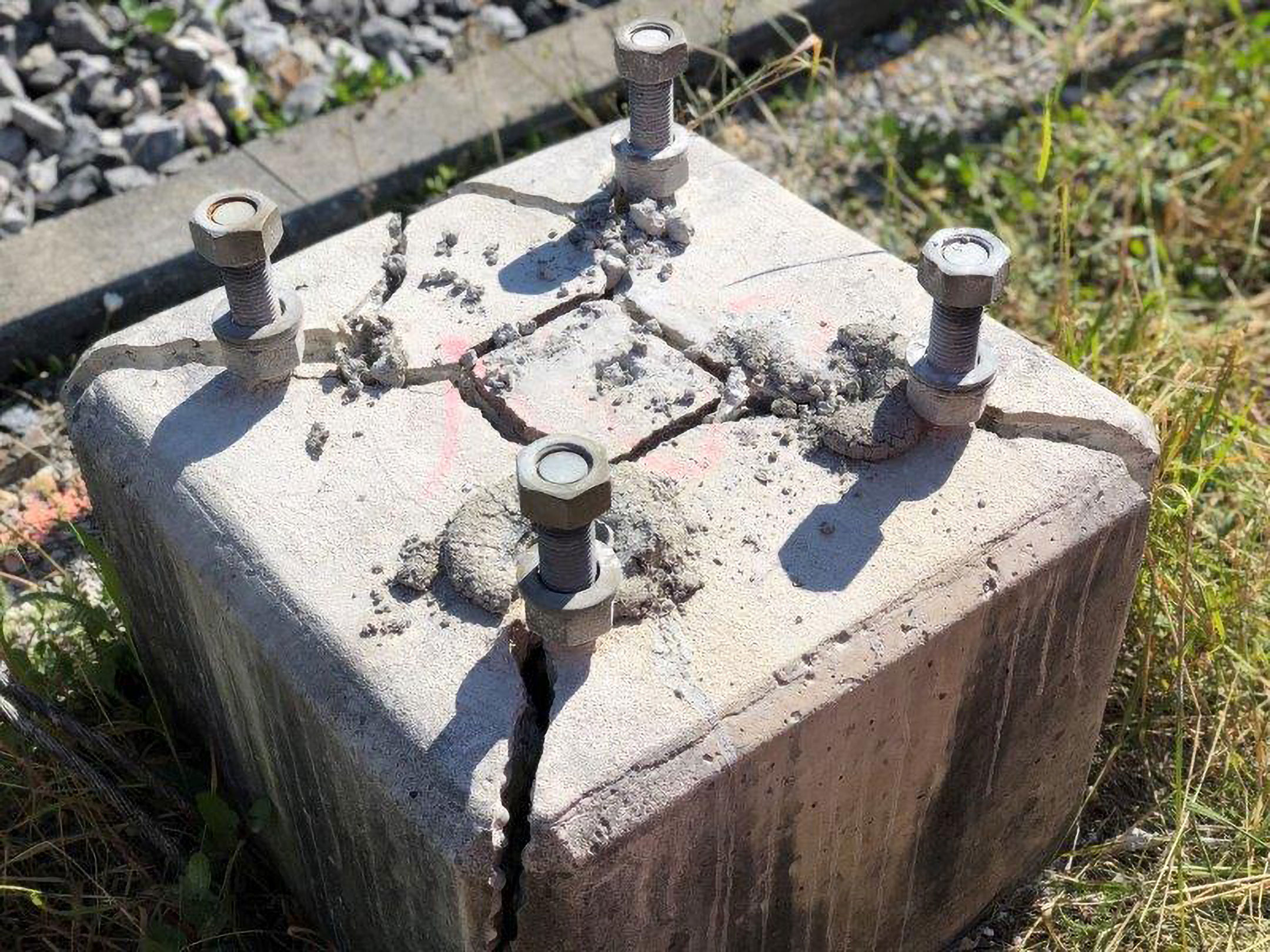
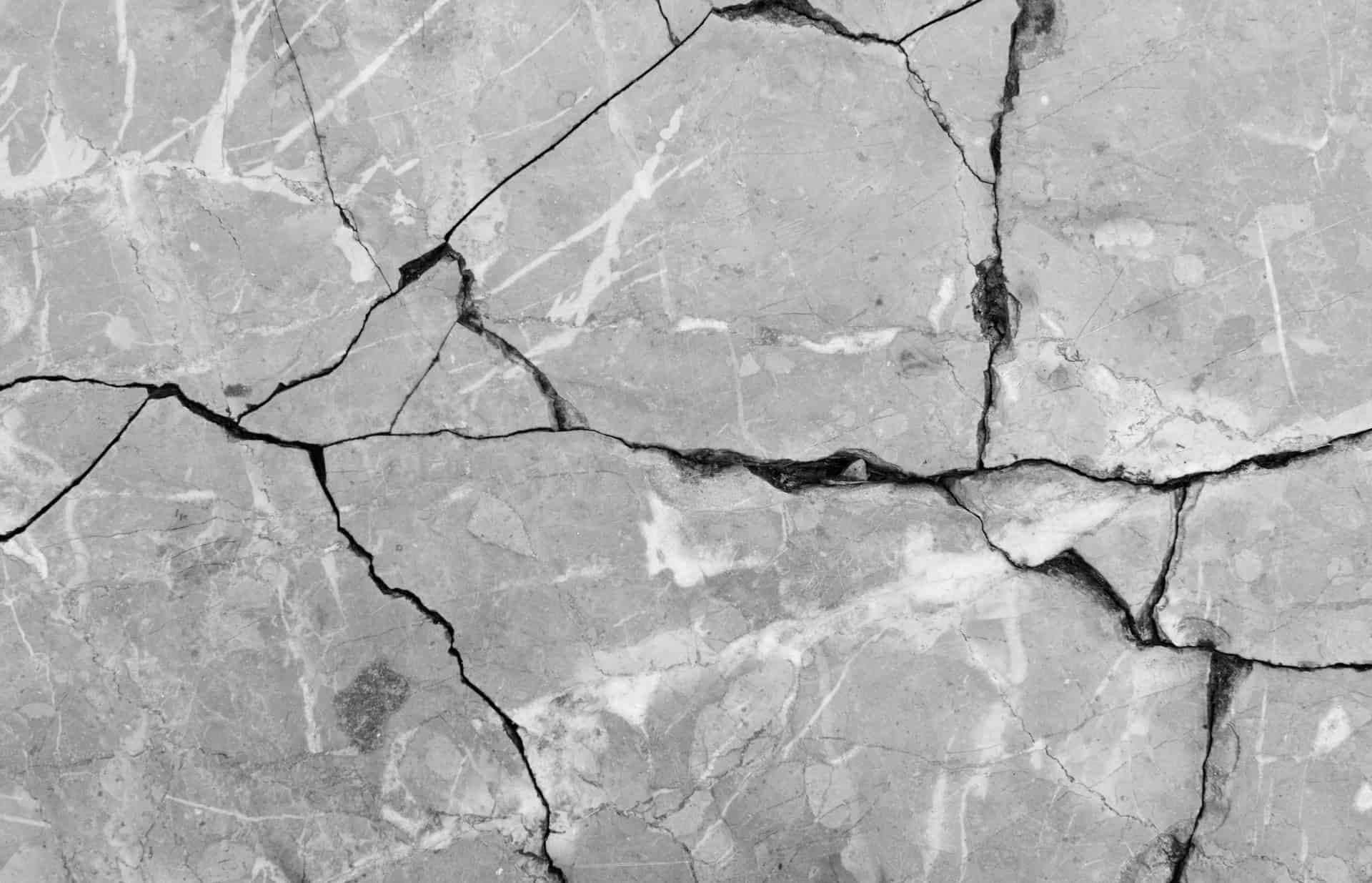
The expanding pressure exploits that weakness. Cracks form between the drilled holes, and the concrete separates in a controlled manner.
There’s no explosion involved.
The force builds gradually and predictably.
Why Use Expanding Grout Instead of Mechanical Breaking?
Traditional concrete removal relies on:
• Hydraulic breakers
• Jackhammers
• Heavy plant attachments
• In some cases, blasting
These methods depend on impact force. They are loud, physically demanding and can transmit vibration into surrounding structures.
Expanding grout changes the approach completely.
Instead of external force, you create internal pressure. Once the holes are filled, there’s no need for continuous breaking. The concrete fractures because of what’s happening inside it, not because it’s being struck from the outside.
This is particularly useful where:
• Vibration could cause damage
• Noise must be reduced
• Access for large machinery is limited
• Controlled splitting is required
Where Expanding Grout Is Commonly Used
Expanding grout is suitable for a wide range of demolition and construction scenarios, including:
• Removing concrete slabs
• Breaking foundations
• Splitting reinforced concrete
• Separating large concrete blocks
• Trench and utility work
It’s frequently chosen for urban projects, internal works and sites where traditional high-impact methods would create unnecessary disruption.
The Process on Site
Using expanding grout is straightforward, provided the drilling is done correctly.
1. Drill the Boreholes
A rotary hammer or core drill is used to create evenly spaced holes to the required depth. Hole spacing determines how the material will crack.
Accuracy matters here. The drill pattern guides the break.
2. Mix the Grout
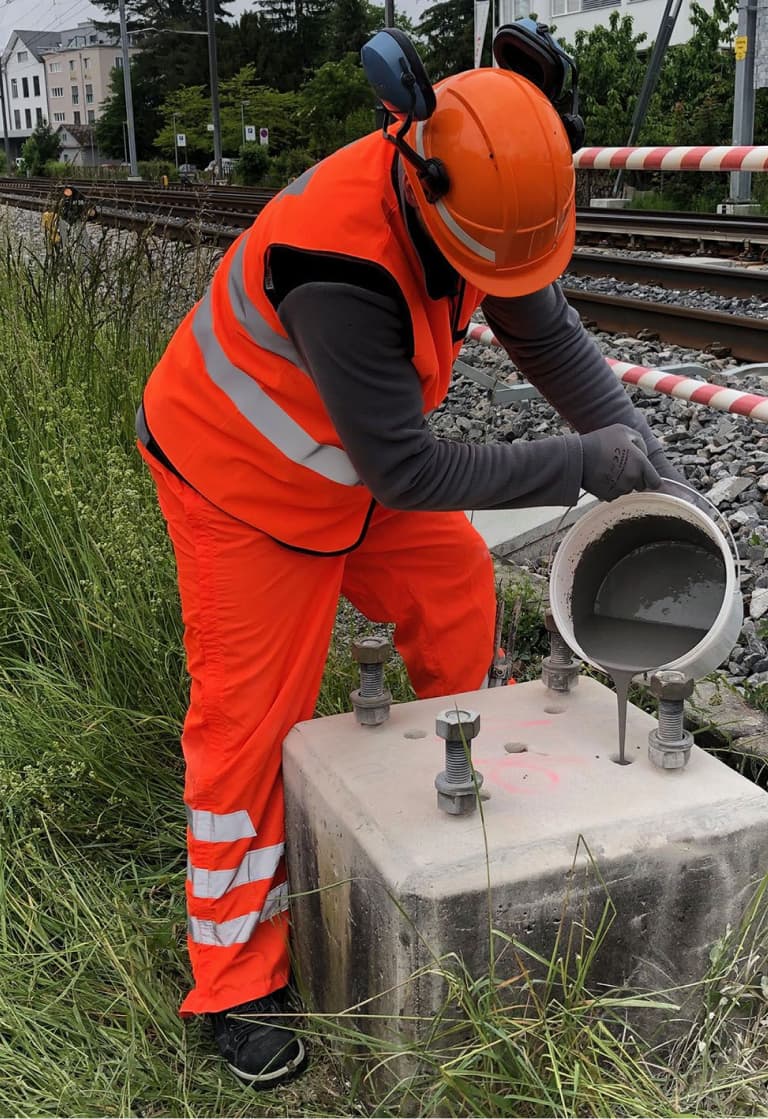
The dry powder is combined with clean water to create a smooth, workable consistency suitable for pouring into vertical boreholes.
No specialist mixing equipment is required – just proper ratios and thorough blending.
3. Fill the Holes
The grout is poured into the drilled holes until full.
At this stage:
• There are no detonators
• No ignition sources
• No mechanical force required
The product is left undisturbed while expansion begins.
4. Controlled Fracturing
As the grout expands, pressure builds within the concrete.
Cracks develop along the line of drilled holes.
Sections loosen and separate.
Once fractured, pieces can be removed in manageable sections.
The entire method is based on controlled internal stress rather than surface impact.
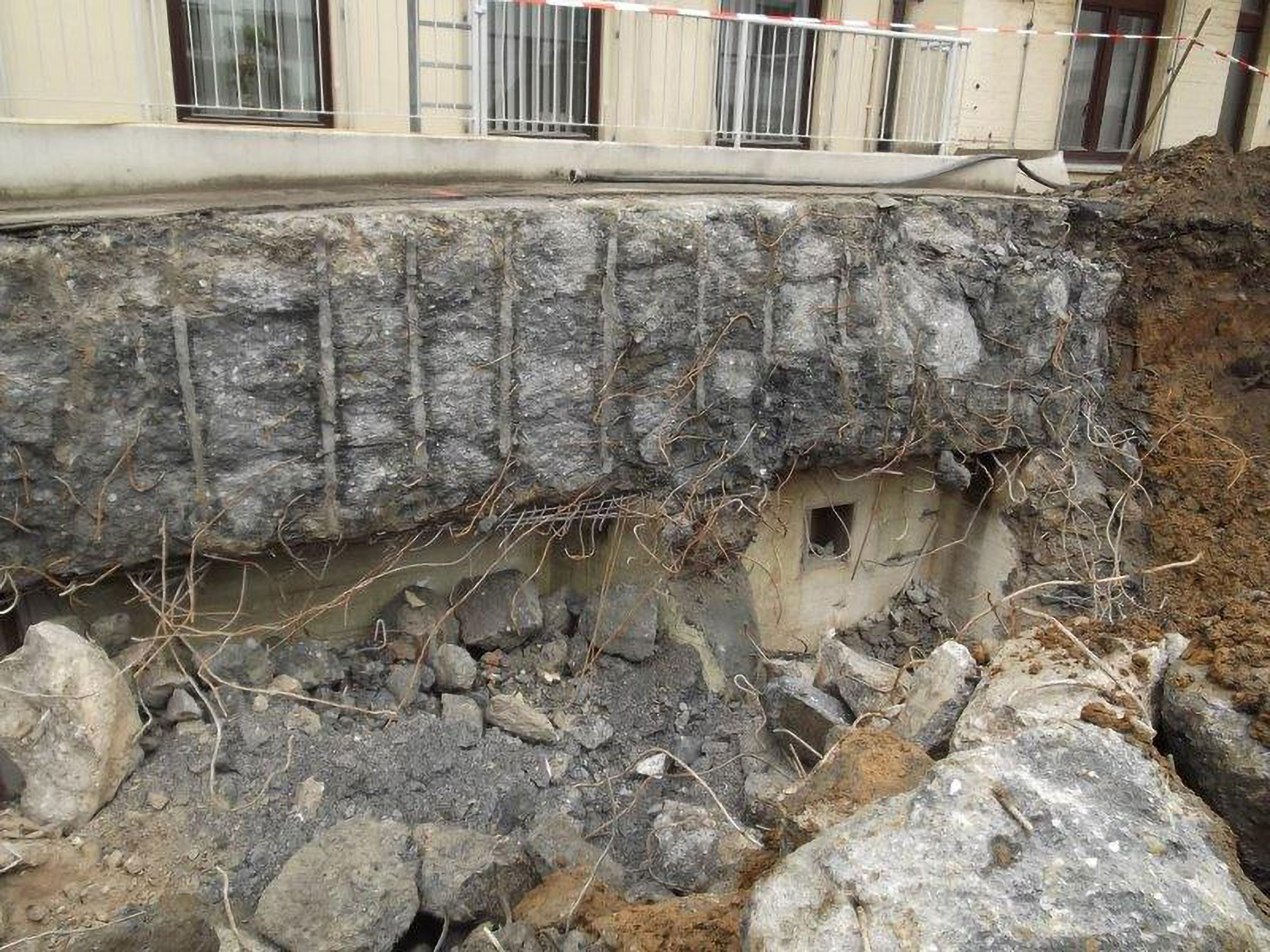
What About Reinforced Concrete?
Reinforced concrete can also be broken using expanding grout.
The concrete mass fractures first.
Reinforcement bars are then exposed and can be cut separately.
This often results in cleaner sectional removal compared to hammering directly through steel-reinforced sections.
Is Expanding Grout Difficult to Use?
No. BETONAMIT® is designed for use by:
• Builders
• Groundworkers
• Demolition contractors
• Landscapers
• Competent DIY users
There is no need for a specialist explosive handling certification. BETONAMIT® allows demolition without a blasting license.
The core method remains simple: Drill → Mix → Fill → Wait
Once the grout is in place, the expansion does the work.
When Expanding Grout Makes Sense Commercially
Using expanding grout can help reduce:
• Plant hire requirements
• Labour fatigue
• Noise disruption
• Risk of vibration damage
• Administrative complications linked to explosives
On many projects, especially in built-up areas, it offers a controlled and practical alternative to high-impact breaking methods.
Considering Expanding Grout for Your Project?
If you’re looking at breaking concrete or rock and want a method based on pressure rather than impact, expanding grout is well worth evaluating.
To assess suitability, you’ll need to consider:
• Thickness of the concrete
• Hole diameter and spacing
• Access for drilling
• Whether reinforcement is present
With the right drilling pattern and correct mix preparation, expanding grout provides a predictable way to fracture hard materials – without blasting and without heavy vibration.
Ready to break concrete without impact or explosives? Shop BETONAMIT® now.