When comparing expansive cement vs mechanical breaking, most people look for a simple answer.
There isn’t one.
The better method depends on the job in front of you. Access, neighbours, structure type, programme pressure and precision all matter more than a headline claim.
This is a project-fit decision, not a single universal winner.
Some jobs demand speed. Others demand control. Many require both at different stages.
Let’s look at real scenarios rather than theory.
The Decision Is About Site Conditions, Not Preference
Choosing a concrete breaking method should start with practical questions:
- Is the structure being retained?
- Are neighbours close?
- Is the building occupied?
- Is vibration a concern?
- Is access restricted?
- How urgent is removal?
If you’re still weighing up cost and safety in isolation, we cover that separately in our detailed cost and safety comparison between a jackhammer and expansive mortar.
Here, we focus on matching the method to the environment.
Scenario 1: Confined or Occupied Spaces
Working inside a building changes the risk profile immediately.
Basement conversions, internal slab removal, structural alterations in occupied properties and shared commercial units all create sensitivity around vibration and noise.
Mechanical breaking indoors introduces:
- Continuous impact noise
- Vibration transfer through floors and walls
- Dust control challenges
- Operator fatigue in tight spaces
In confined areas, manoeuvring a breaker is not always practical.
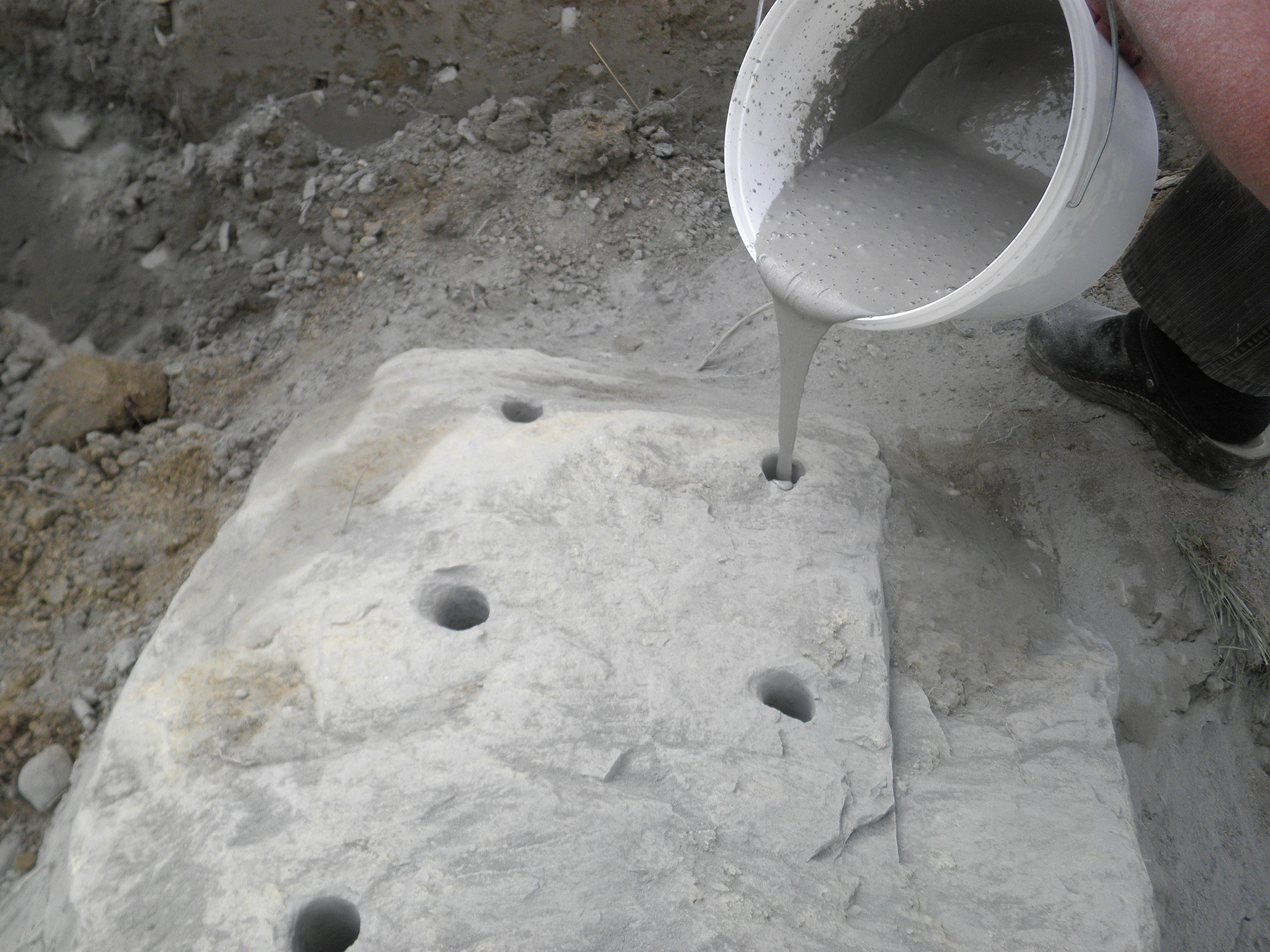
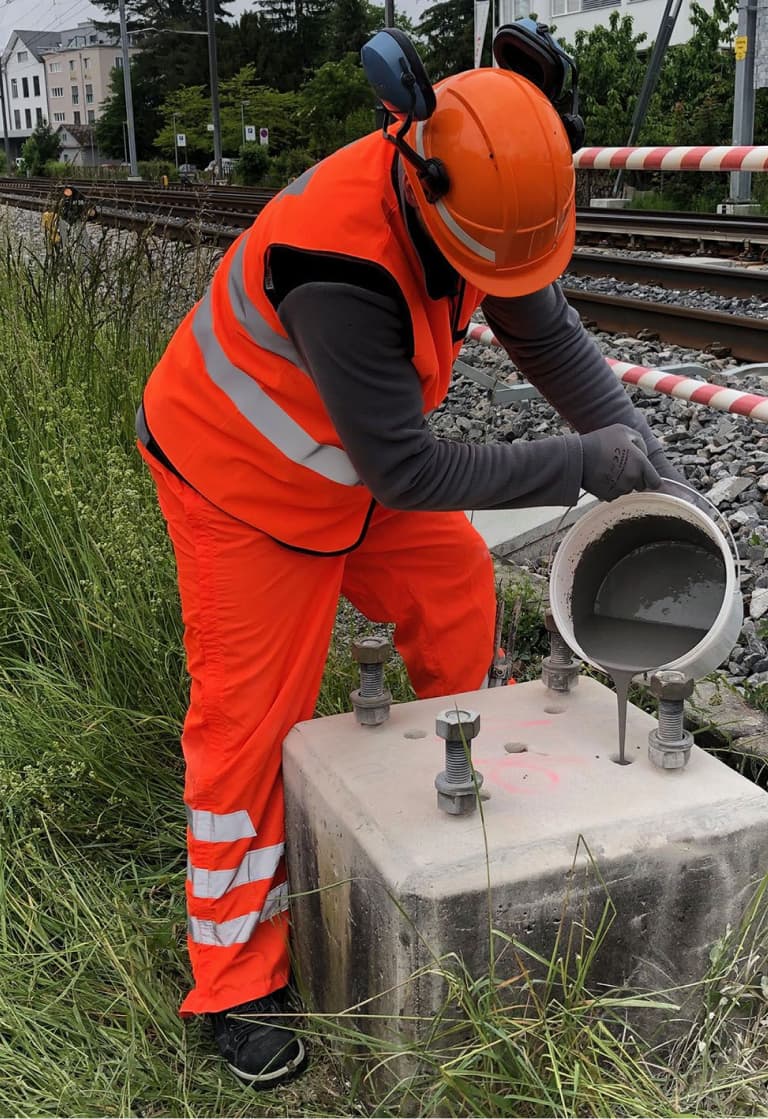
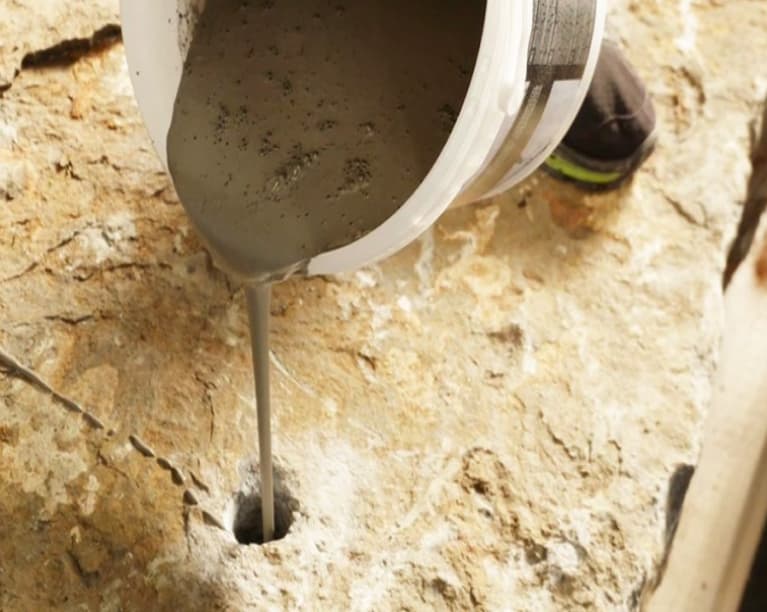
Using expansive mortar allows you to drill a controlled pattern and let internal expansion do the work. The process is simple: Drill > Mix > Fill > Wait
Drill the pattern. Mix accurately. Fill fully. Allow expansion to fracture the slab.
There is no repeated hammering phase once filled.
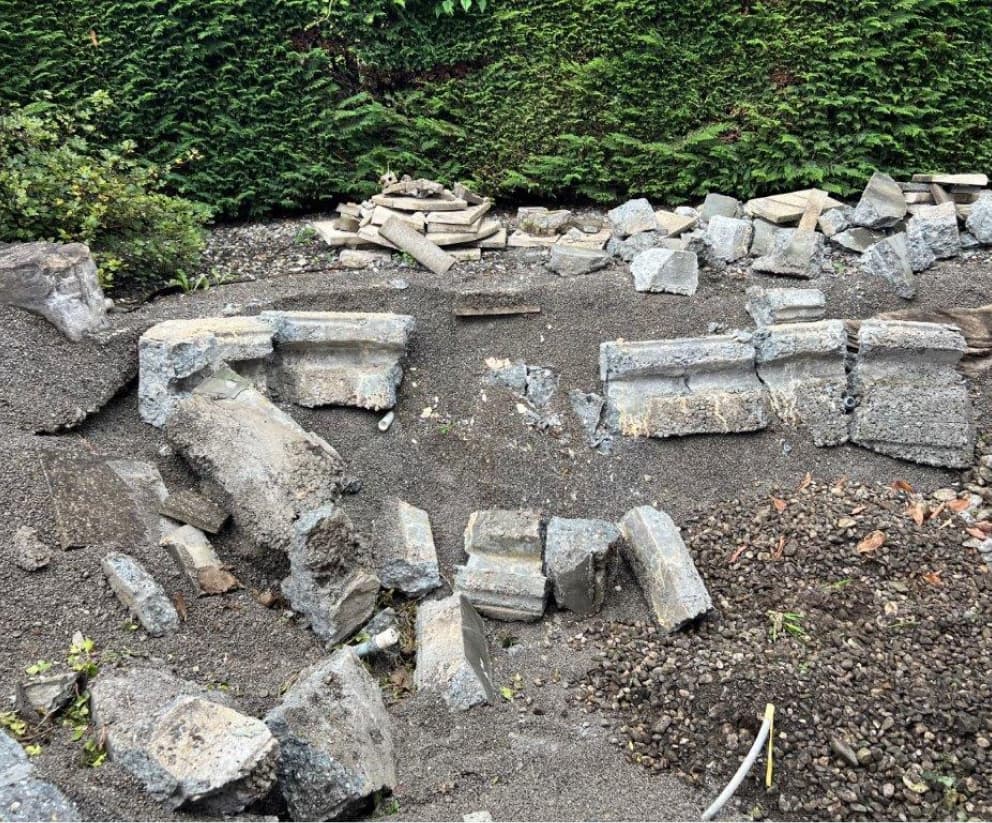
Expansive cement suits precision and access-restricted jobs where impact tools would be disruptive or physically awkward.
Does it work as fast as mechanical breaking? Not in terms of instant visual breakage. But in confined spaces, the overall workflow is less disruptive and more controlled.
Scenario 2: Noise and Vibration Sensitive Sites
Terraced housing, semi-detached properties and structures tied into retained walls raise the stakes.
Mechanical breaking transfers vibration into adjacent elements. In shared structures, vibration is felt next door.
For:
- Removing foundations beside retained buildings
- Cutting back slabs connected to existing structure
- Working in residential streets
- Projects near fragile masonry
Non-explosive vs mechanical demolition becomes a risk management decision.
Expansion systems generate no impact noise during the breaking phase and no vibration transfer through structure.
If your site is vibration sensitive, expansive cement often provides the better match.
For a broader overview of how mechanical and chemical approaches differ across applications, see our guide on mechanical vs chemical concrete breaking tools compared.
Scenario 3: Large Open Sites Where Speed Matters Most
Not every job is delicate.
On open demolition sites with no retained structure and no neighbouring buildings within metres, mechanical breaking has clear advantages.
Hydraulic breakers:
- Deliver immediate fragmentation
- Remove large volumes quickly
- Integrate easily with plant
- Suit bulk slab clearance
If the primary objective is rapid removal in an isolated environment, mechanical breaking is often the better fit.
Expansive cement can still be used on large volumes, but drilling time and staged cracking may extend the programme compared to a mounted breaker.
Where speed outweighs sensitivity, mechanical methods usually win.
Scenario 4: Structural Precision and Minimal Collateral Damage
Some projects demand selective removal rather than full demolition.
Examples include:
- Removing part of a slab while retaining adjacent sections
- Altering foundations under load-bearing walls
- Breaking concrete around embedded services
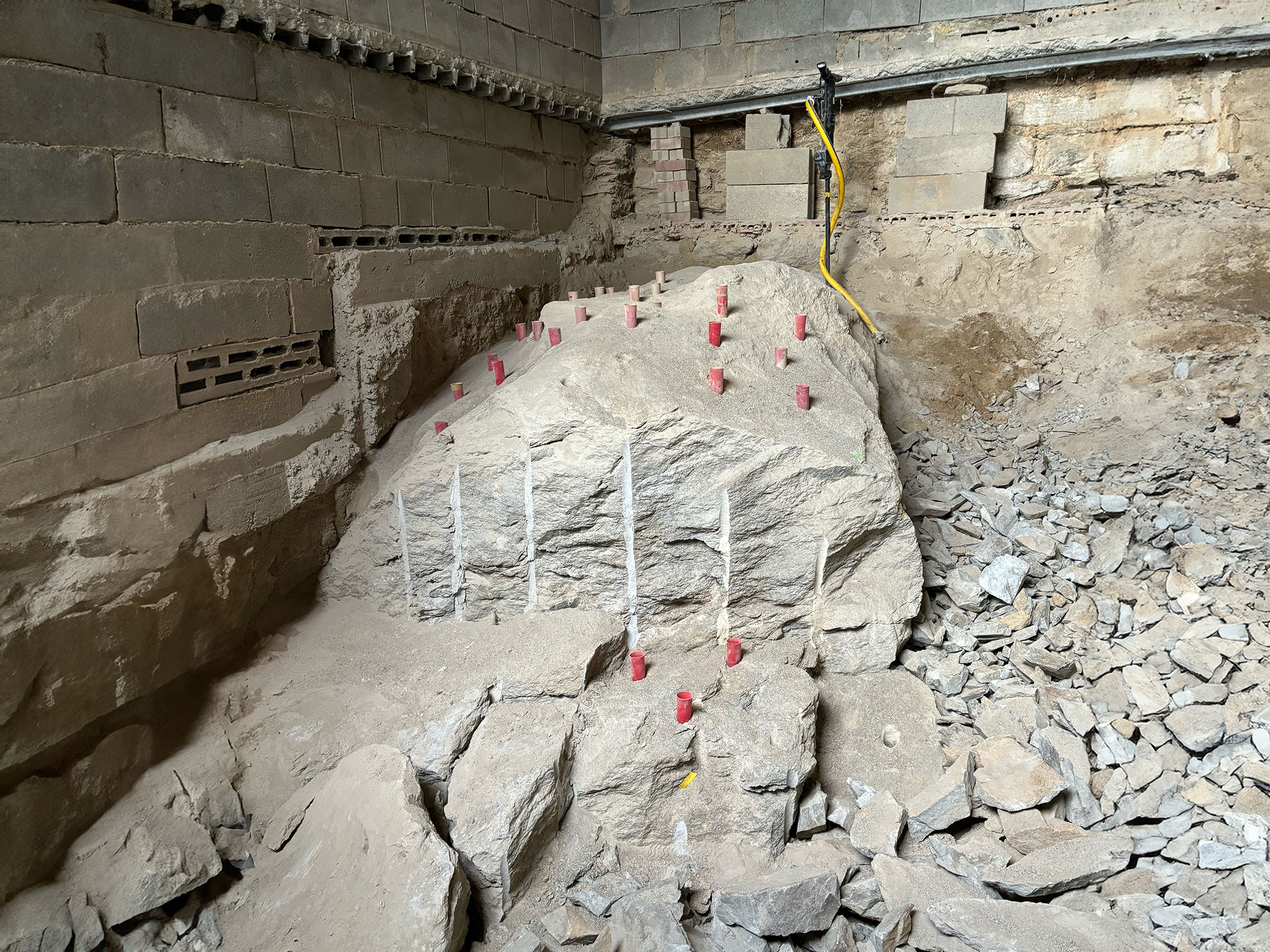
- Splitting rock in trenches without destabilising sides
In these cases, precision matters more than speed.
Expansion systems fracture concrete along drilled lines. The cracking follows the pattern you establish.
Mechanical breaking applies repeated impact which can travel beyond the intended boundary.
If minimal collateral damage is critical, expansive cement usually provides more predictable results.
Can Both Methods Be Used Together?
Yes. Combining both methods on a single project is common practice.
For example:
- Use expansive cement near retained structure to create controlled fractures
- Switch to mechanical breaking once mass is isolated
- Use breakers for bulk removal after sensitive areas are addressed
Choosing a concrete breaking method does not mean committing to only one approach.
Many contractors use expansion to manage risk, then mechanical tools to accelerate clearance once conditions allow.
Which Method Fits Your Job?
When deciding between expansive cement vs mechanical breaking, weigh the following factors against your site:
Site Access
Tight internal or restricted access favours expansion.
Open ground with plant access favours mechanical breaking.
Structure Type
Retained or shared structures favour expansion.
Standalone slabs favour mechanical breaking.
Noise Sensitivity
Residential or shared-wall settings favour expansion.
Industrial or isolated sites favour mechanical breaking.
Timeline
Immediate clearance pressure favours mechanical methods.
Flexible timelines favour expansion methods.
Budget Considerations
High labour cost and vibration risk can make expansion commercially sensible.
Existing plant on site may make mechanical breaking economical.
There is no universal winner. The right choice depends on which constraints matter most.
Is Expansive Cement Safer?
From a vibration and structural risk perspective, yes.
Expansion removes repeated shock loading. There is no impact phase after filling. Structural transmission is significantly reduced.
Mechanical demolition remains safe when managed correctly, but it introduces higher vibration and noise exposure.
The safer method depends on the sensitivity of your environment.
Is Expansive Cement Cheaper?
Material cost alone rarely tells the full story.
Project cost includes:
- Labour time
- Fatigue
- Vibration damage risk
- Noise-related delays
- Repair costs
On sensitive projects, avoiding secondary costs can outweigh initial material expense.
Before ordering, use our calculator to estimate the right amount of product for your demolition based on borehole diameter, depth and spacing.
Accurate planning prevents under-ordering or waste.
Making the Right Choice for Your Project
When asking how to decide between chemical and mechanical concrete breaking, focus on fit rather than preference.
Expansive cement suits precision and access-restricted jobs. Mechanical breaking suits speed on open sites.
The best method to break concrete is the one that aligns with your site conditions, not the one that sounds strongest.
If you are unsure which approach suits your project, explore our expansive mortar solution and assess whether controlled expansion fits your constraints.
Choosing correctly at planning stage prevents problems later.