Breaking Out 3m x 3m Pile Caps at 100 West Cromwell Road, Kensington
- Project: 100 West Cromwell Road (100 Kensington)
- Client: Specialist Cutting Services Ltd (SCS) for Ardmore
- Construction Location: Royal Borough of Kensington and Chelsea
The Challenge
100 West Cromwell Road is a major mixed-use scheme delivering 462 apartments across seven new blocks, with the tallest rising to 33 storeys.
One of the biggest constraints on the project sat below ground.
The new residential column grid didn’t align with the existing Tesco car park structure. To make it work, a substantial transfer structure was introduced above the car park, allowing loads from the new blocks to be redirected into new columns positioned around the retained frame.
However, several existing basement columns and their supporting pile caps – some measuring 3m x 3m – were not suitable for the new loads.
They had to be removed.
And this is where the real site problem began.
The Site Constraints
- Tight noise restrictions
- Vibration sensitivity
- Existing structure needing support
- Live environment with adjoining commercial premises and railway infrastructure.
- Confined basement working areas
Traditionally, SCS would have used a Demolition Robot from their fleet to break out pile caps of this size.
But on this job, heavy percussive equipment wasn’t an option. The vibration and noise simply wouldn’t be accepted.
They needed a method that could:
- Break out large mass concrete safely
- Work within strict acoustic limits
- Avoid damaging surrounding retained structure
- Operate in confined basement conditions
- Keep the programme moving
The Solution
Controlled Breaking with BETONAMIT®
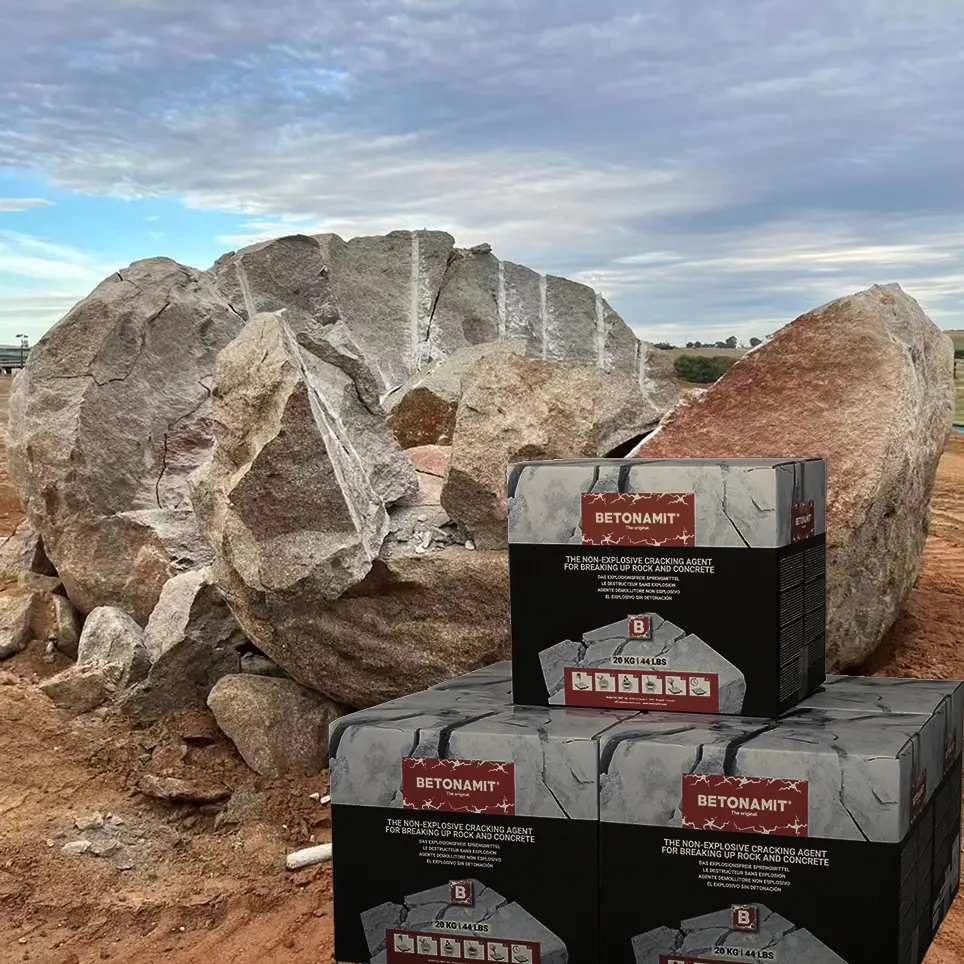
SCS turned to BETONAMIT® non-explosive demolition agent.
Instead of bringing in heavy plant, the process was straightforward:
- Drill
- Mix
- Fill
- Wait
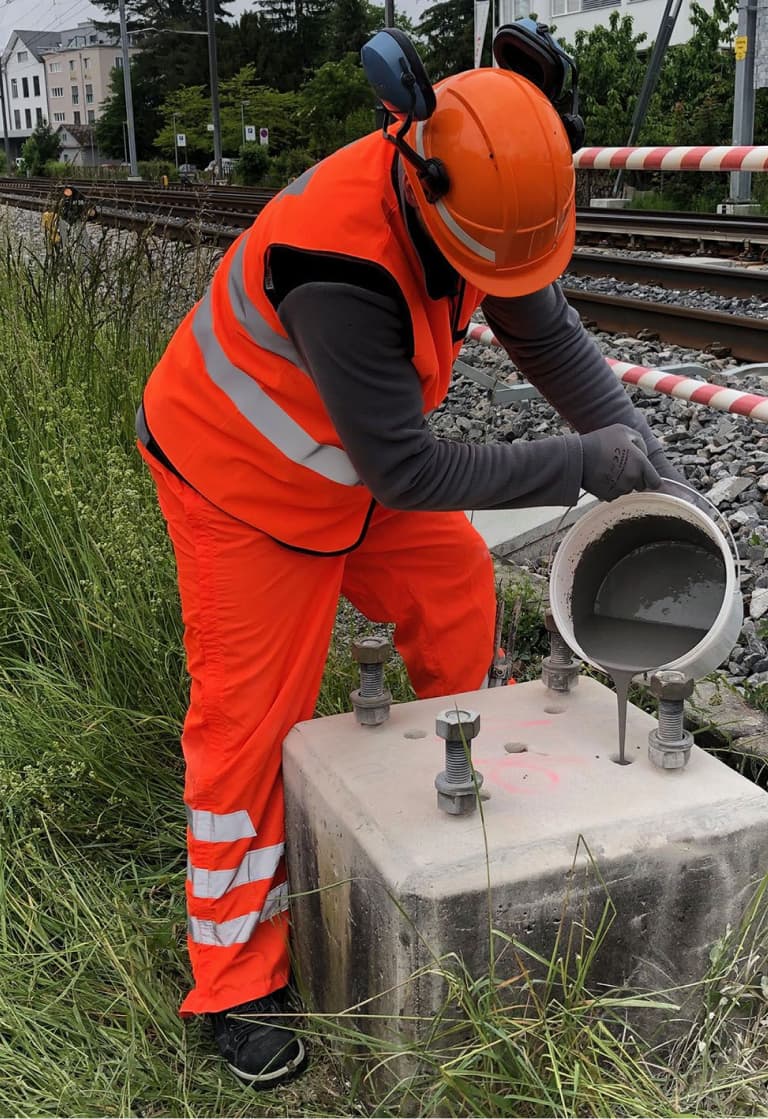
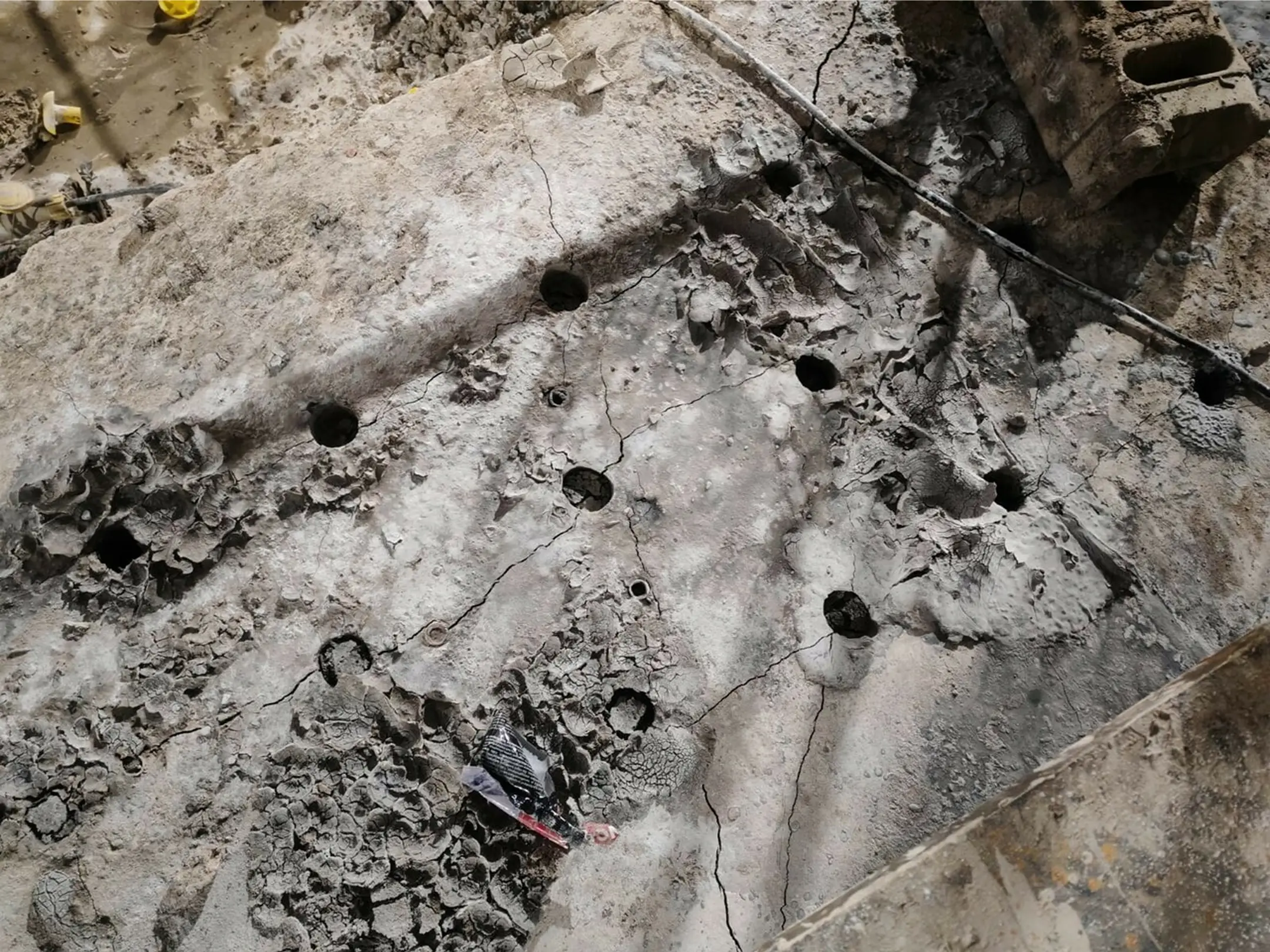
- Holes were drilled into the pile caps using a standard rotary percussion drill (30–40mm diameter).
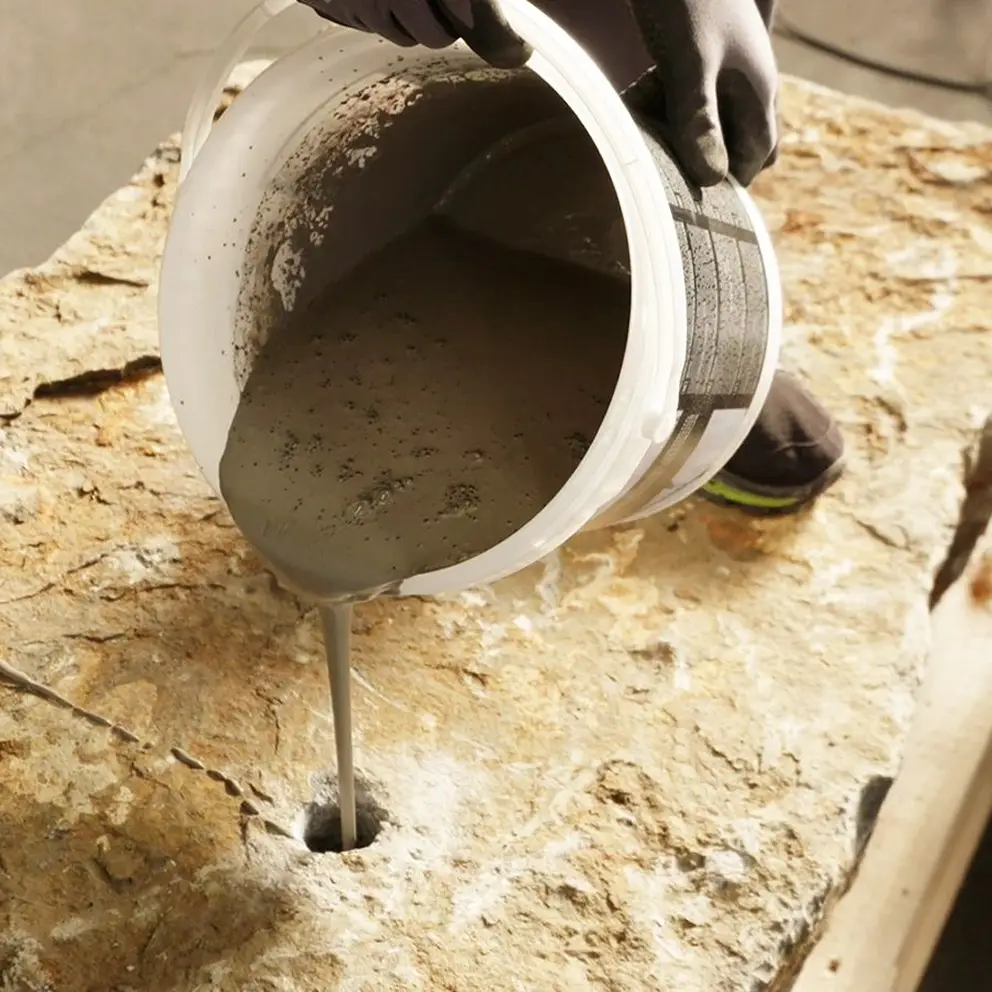
- BETONAMIT® was mixed with clean water using a paddle and bucket.
- The slurry was poured into the drilled holes.
- The material expanded and fractured the concrete in a controlled, vibration-free manner.
Both vertical and horizontal grades were used to suit the orientation of the work.
No explosives.
No specialist demolition licence.
No heavy breakers hammering away in a basement.
Betonamit® Why It Worked on This Project
- No vibration transfer into retained structure
- No excessive noise complaints
- Minimal equipment required
- Easy to deploy in confined areas
- Safe and controlled cracking
Contractor Feedback
“We are very happy with the results obtained using BETONAMIT on the project. It allowed us to get on with the job and meet the strict noise levels that are imposed on this site. We simply couldn’t do it with our traditional equipment. We will use BETONAMIT again when the situation suits its use”
The Practical Takeaway
Large pile caps in a basement. Strict London noise restrictions. Retained structures that couldn’t be shaken. Jackhammers and heavy breaking equipment weren’t suitable.
BETONAMIT® provided a permit-free, low-disruption alternative that allowed the team to:
- Stay compliant
- Stay in control
- Stay on programme
For contractors working in urban environments where vibration, noise and access are real constraints, BETONAMIT® offers a straightforward way to break out concrete without the usual complications.
- Simple kit.
- No blasting licence.
- No specialist certification.
Just drill, mix, fill and let the expansion do the work.